

2026.11.05 HTWO
The global hydrogen industry is moving beyond its early phase, which was largely defined by
project announcements, and entering a scale-up phase characterized by growing investment,
construction and operational activity.
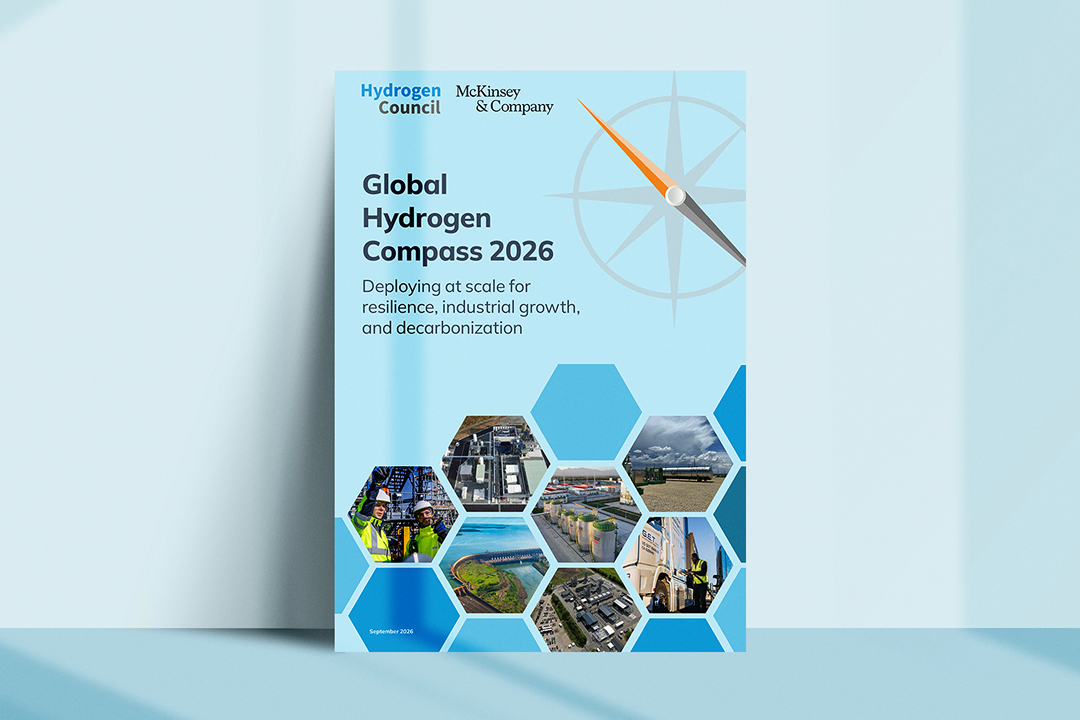
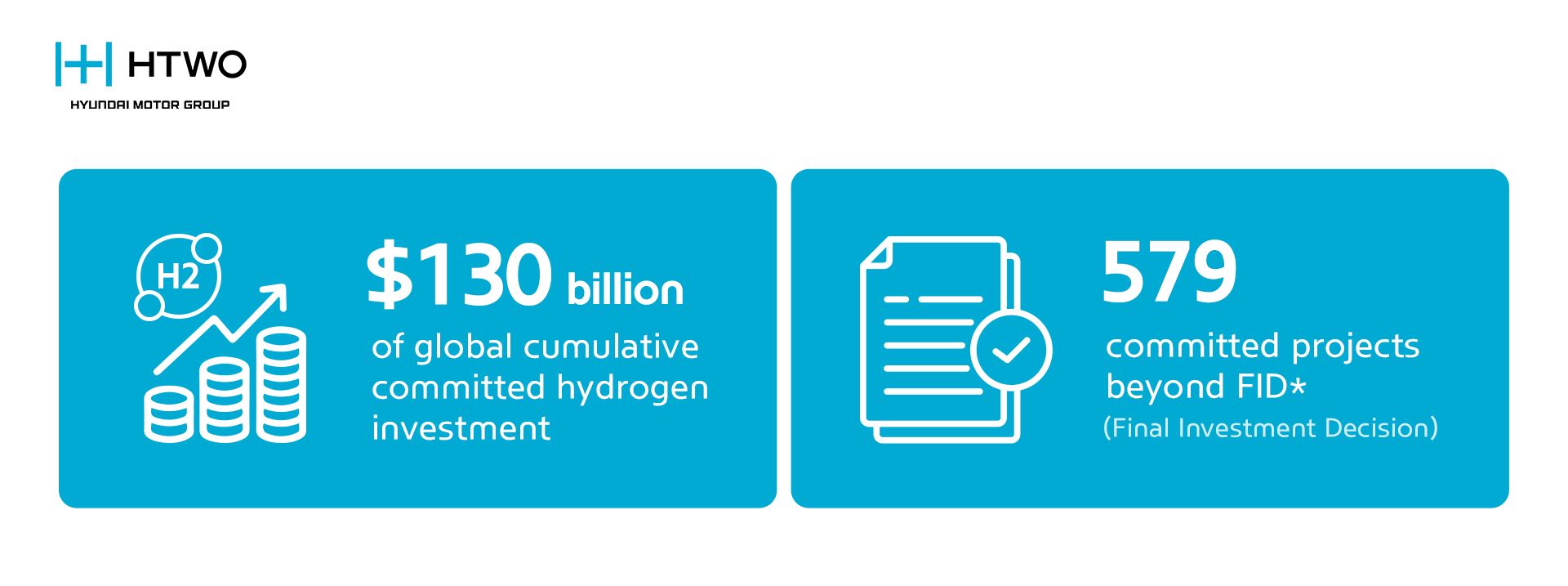
According to the Global Hydrogen Compass 2026, committed global investments in waste-derived
hydrogen have reached USD 130 billion, corresponding to 6.9 Mtpa of committed capacity across
more than 570 projects past FID, roughly 90% of which are already under construction or
operational. The online project tracker identifies a total of 579 projects at the FID,
construction or operational stages.
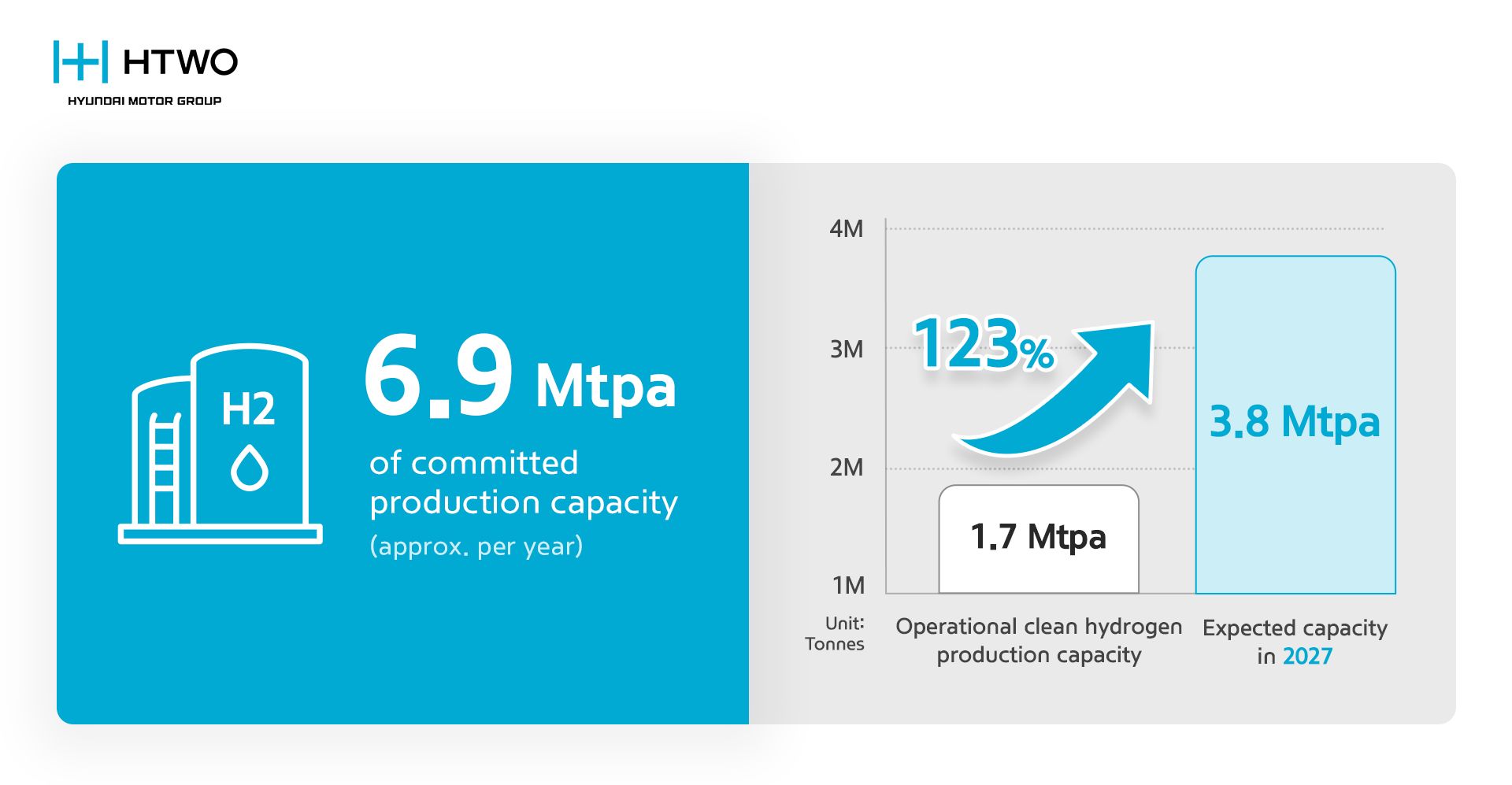
Actual production capacity is also expanding. Operational waste-derived hydrogen production
capacity currently stands at approximately 1.7 Mtpa, up 70% year on year. If projects under
construction begin operations as scheduled, this figure is expected to reach approximately 3.8
Mtpa by 2027.
The scale of individual projects is also growing significantly. According to the Hydrogen
Compass analysis, the average investment for committed projects is approximately USD 225
million, while projects in the Front-End Engineering Design (FEED) phase average around USD 1
billion, clearly demonstrating that the market's center of gravity is shifting from early
demonstration pilots to large-scale commercial deployments.
At the same time, the way the industry is assessed is changing. The IEA's Global Hydrogen Review
2026 announced low-emissions hydrogen projects targeting operations by 2030 represent
approximately 27 Mtpa, while production capacity that has already reached final investment
decision stands at around 4.3 Mtpa.
This highlights the growing importance of execution in the hydrogen industry. What matters
increasingly is not the volume of hydrogen announced, but how much of that capacity translates
into actual investment, construction and operations.
Jaehoon Chang, Vice Chair of Hyundai Motor Group and Co-Chair of the Hydrogen Council,
highlighted this transition during the launch of the Global Hydrogen Compass 2026:
“The next 10 years will take the hydrogen industry from realism to scale-up. To make that
happen, we need clear policy signals that support demand creation and a stable, sustainable
regulatory environment.”
The Vice Chair noted that focus of the discussion is shifting from whether hydrogen can deliver
on its promise to how quickly countries can build their hydrogen ecosystems. He emphasized the
importance of growth at the ecosystem level, with production, demand, infrastructure and policy
working together in an integrated way.
Ultimately, the next decade will not be about testing potential, but about determining whether
hydrogen can successfully transition into a functioning, scaled market.
Key Figures of the 2026 Global Hydrogen Market
• Global committed waste-derived hydrogen investment has reached USD 130 billion, corresponding
to 6.9 million tonnes per year (Mtpa) of committed capacity.
• Over 570 projects have reached or passed the Final Investment Decision (FID) milestone, with
579 projects tracked online.
• Operational waste-derived hydrogen capacity stands at approximately 1.7 Mtpa, up 70%
year-on-year, and is projected to expand to approximately 3.8 Mtpa by 2027 as projects under
construction come online.
• Potential economically viable waste-derived hydrogen demand by 2030 is estimated at
approximately 11 Mtpa, of which 6 Mtpa is already supported by enacted policies.
• As of late September 2026, Hyundai Motor achieved cumulative global sales of approximately
54,000 fuel cell electric vehicles (FCEVs), and over 3,500 hydrogen buses have been deployed in
South Korea.
• Hyundai Motor's passenger and commercial FCEVs have accumulated approximately 2.3 billion
kilometers of real-world driving data worldwide.
• Leveraging its extensive hydrogen mobility experience, Hyundai Motor Group is actively
expanding its end-to-end hydrogen ecosystem initiatives connecting production, supply, and
utilization—including HTWO ENERGY's Cheongju waste-to-hydrogen (W2H) production and refueling
facility, along with the 200-megawatt electrolysis plant and AI Hydrogen City, both of which are
being developed in Saemangeum AI Valley.
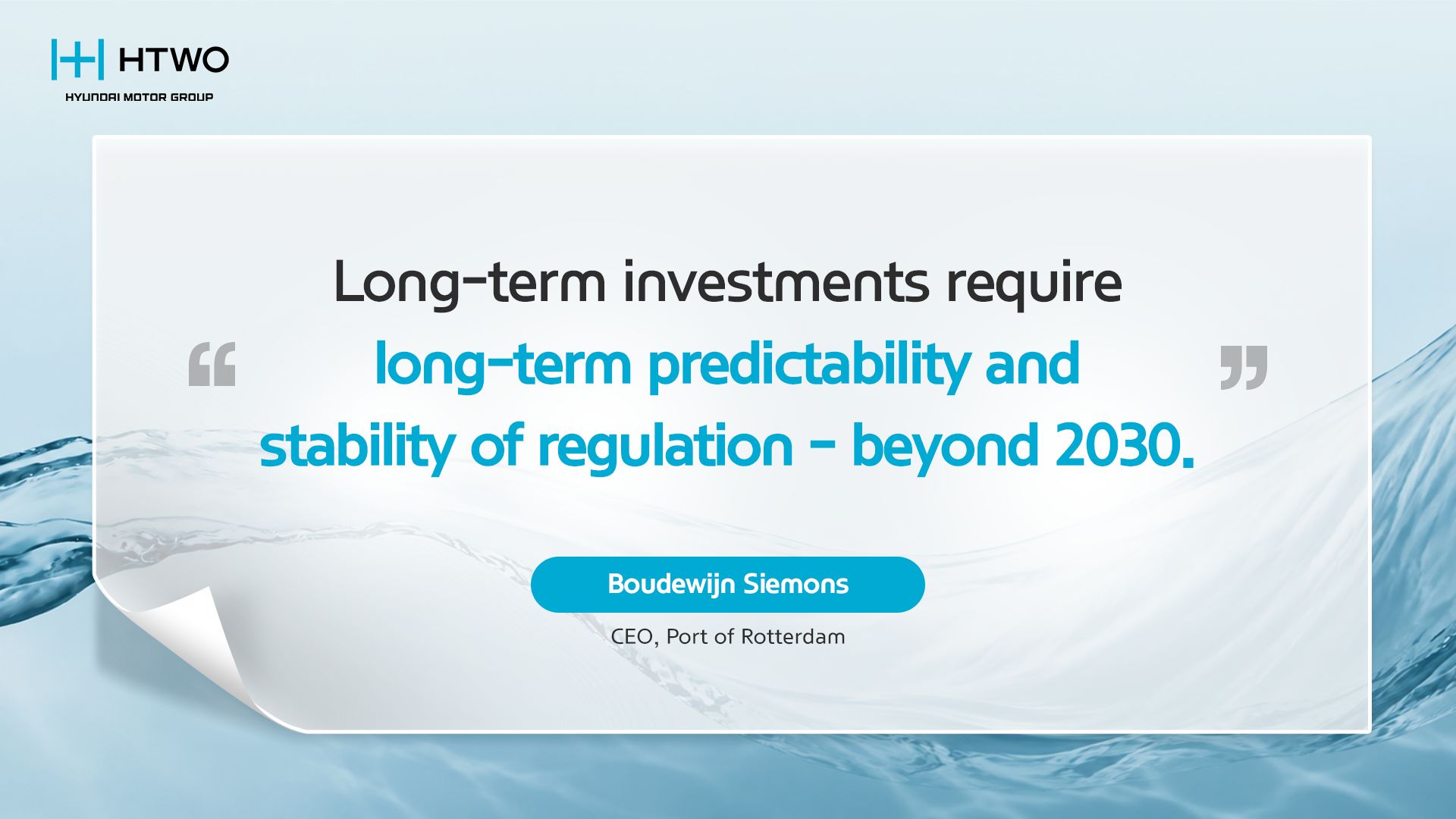
The most important condition is clear visibility on demand, giving companies the confidence
to make long-term investment decisions. For large-scale investment in hydrogen production to
translate into viable businesses, companies need to know who will use hydrogen, in what
volumes and on what terms of continuity.
The Global Hydrogen Compass 2026 identifies approximately 11 Mtpa of waste-derived hydrogen
demand globally that has the potential to become economically viable by 2030. Of this, around 6
Mtpa is already supported by enacted policies, and roughly 4.2 Mtpa is linked to binding offtake
agreements.
A further 5 Mtpa of potential demand, however, could translate into actual demand depending on
how consistently existing policies are implemented in the market. Ultimately, what matters is
consistent and predictable policy implementation that enables companies to anticipate future
demand with confidence.
The IEA also identifies demand visibility as a key condition for expanding the low-emissions
hydrogen market. In 2025, newly signed offtake agreements for low-emissions hydrogen totaled
approximately 1.7 Mtpa, but only around 20% of this volume was covered by firm contracts.
Meanwhile, newly committed production capacity through FID fell to less than 0.8 Mtpa. The IEA
identifies high costs, uncertain demand, complex or unclear regulations, and insufficient
infrastructure as key barriers to investment.
Conversely, when policies reliably underwrite long-term demand, industry gains the commercial
rationale to invest in production facilities and supply infrastructure. Europe is creating
renewable hydrogen demand via mandates and regulations, while China is scaling by combining
massive production capacity with its industrial base. South Korea serves as a prime example of
cultivating hydrogen mobility as an initial demand anchor while concurrently expanding vehicle
rollouts and refueling networks.
Although each country is taking a different approach, the common principle is clear. For the
hydrogen market to move into a phase of growth, it is not enough to simply expand supply
capacity. The market needs sustained, long-term demand underpinned by predictable policy.
Ultimately, demand visibility and policy predictability are the starting points for turning
corporate investment into real projects.
In 2020, South Korea enacted the world's first Hydrogen Economy Promotion and Hydrogen Safety Management Act and established a whole-of-government governance structure led by the Hydrogen Economy Committee. Since then, the government has supported the development of the nascent hydrogen market through initiatives such as purchase incentives for FCEVs and the expansion of refueling infrastructure.
These efforts have been complemented by Hyundai Motor Group's early investment in technology development and the expansion of its passenger and commercial vehicle line-up. As of September 2026, Hyundai Motor's cumulative global FCEV sales surpassed 54,000 units. This is a notable example of how policy can stimulate early demand, while corporate investment expands product
offerings and infrastructure to help build a market.
South Korea, Advancing Hydrogen Supply and Demand as a Policy Objective
• Enactment of the World's First Hydrogen Act in 2020
: In February 2020, South
Korea laid the legal foundation for a hydrogen-based society by enacting the world's first
Hydrogen Act (Hydrogen Economy Promotion and Hydrogen Safety Management Act). The Hydrogen
Economy Committee*, comprising the Prime Minister, relevant government ministers, and
private-sector experts, meets quarterly to closely oversee hydrogen production, the development
of refueling infrastructure, and the supply and demand of FCEVs.
*The Hydrogen Economy Committee serves as the national control tower for the hydrogen economy. Chaired by the Prime Minister and comprising ministers from eight government ministries alongside experts from industry, academia, and research institutes, the committee determines and drives key national policies.
• Support for the Deployment and Operation of FCEVs
: South Korea has established
the world's largest fleet of hydrogen-powered passenger and public vehicles, supported by an
extensive hydrogen refueling infrastructure network.
• Designation of 16 ‘Hydrogen Cities’ (Ministry of Land, Infrastructure and
Transport)
: Hydrogen Cities aim to establish sustainable urban hydrogen ecosystems
by integrating hydrogen into one of the key energy sources. To support the Hydrogen City
Development Program*, the government provides approximately KRW 40 billion in funding per city,
with costs shared equally between the central government (50%) and local governments (50%).
* The Hydrogen City Development Program supports the development of urban hydrogen infrastructure - covering production, transportation (pipelines, tube trailers, etc.), and utilization (fuel cells, etc.) - to enable the use of hydrogen energy in residential and commercial buildings as well as urban transportation.
• Designation of Two Specialized Hydrogen-Specialized Complexes (Ministry of Climate, Energy
and Environment)
: The government has designated and operated two specialized
hydrogen-specialized complexes to foster regional clusters of hydrogen-related companies. In
particular, subsidies are provided to companies relocating from the Seoul metropolitan area to
these designated complexes, with a total budget of KRW 509.5 billion allocated to support the
initiative.
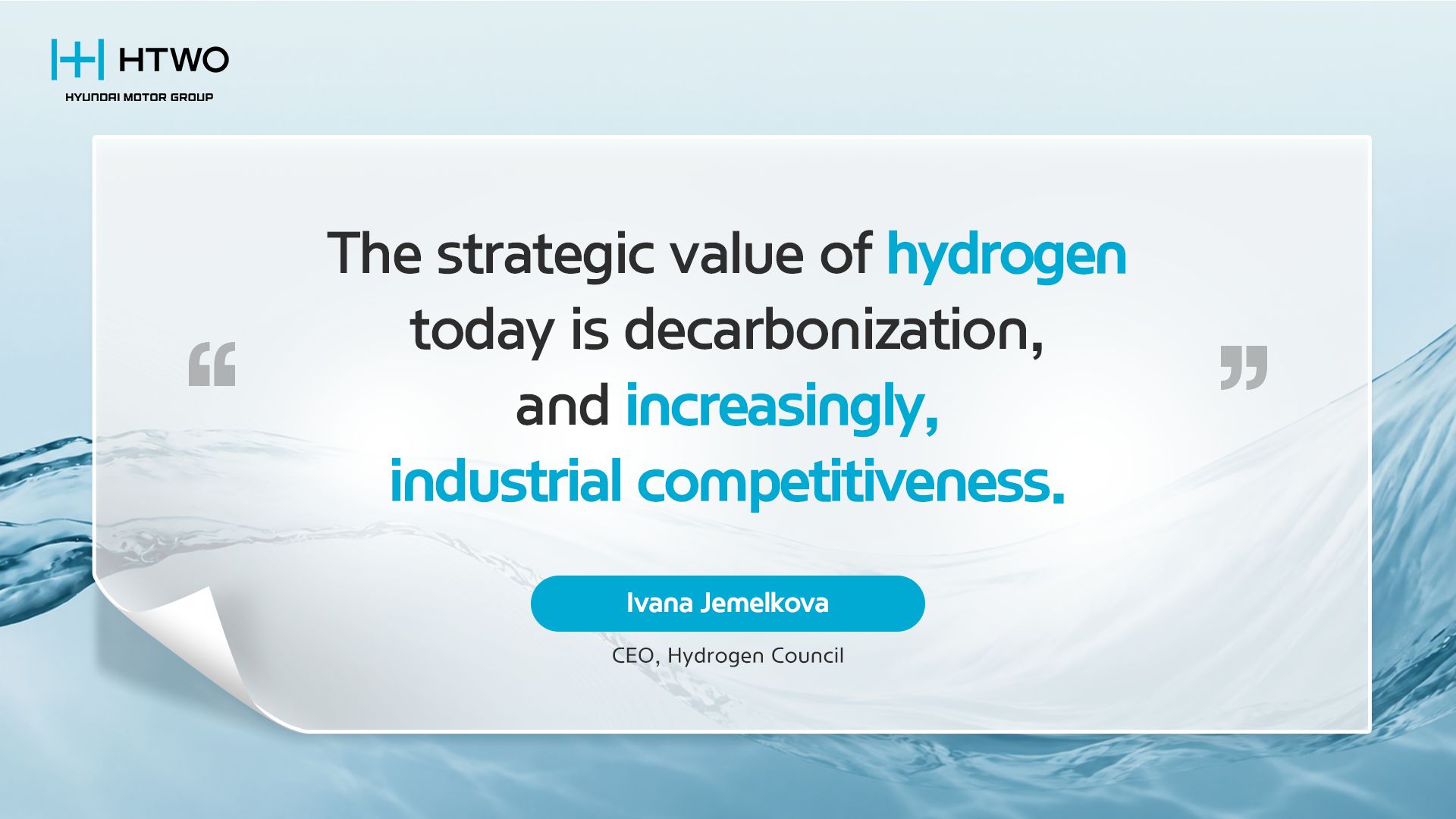
Hydrogen's role is expanding beyond GHG emissions reduction to include diversifying energy
supply chains and strengthening industrial competitiveness. This is because hydrogen can be
used to store and transport renewable energy and connect the power, industrial and mobility
sectors.
As geopolitical tensions, uncertainty in energy supply chains and extreme weather events
persist, the concept of energy security is also evolving. The International Energy Agency (IEA)
notes that securing reliable energy at stable prices is no longer enough. Diversifying energy
sources, increasing flexibility and strengthening resilience to supply disruptions are becoming
increasingly important.
The Hydrogen Compass also highlights a shift in the drivers of waste-derived hydrogen
investment. More than 60% of committed waste-derived hydrogen investment worldwide is
concentrated in markets where energy security and industrial growth are as important as, or more
important than, GHG emissions reduction. Producing waste-derived hydrogen and hydrogen
derivatives locally can help diversify energy and industrial feedstock supplies while reducing
dependence on imports.
Hydrogen can be converted into a hydrogen form from electricity generated by renewable energy,
stored and transported, and subsequently utilized in industrial feedstock, power generation,
mobility, and other sectors. In this way, hydrogen can serve as a key enabler of sector coupling
- bridging power, industry, and transportation.
The importance of these connections is growing, particularly as the expansion of AI and data
centers drives up electricity demand.
Hydrogen should therefore be viewed not simply as a fuel, but as a key component of energy
infrastructure that connects the power and industrial sectors. Hyundai Motor Group's Saemangeum
AI Valley initiative offers a concrete example of this approach. At Saemangeum, which the Group
aims to develop into a hub for innovation and growth in robotics, AI and hydrogen energy,
Hyundai Motor Group plans to establish an advanced value chain connecting an AI data center,
gigawatt-scale solar power generation, a 200-megawatt electrolysis plant, hydrogen supply
infrastructure and an AI-powered hydrogen city. The waste-derived hydrogen produced at the
electrolysis plant will also be used to power various forms of mobility, including trams, buses
and demand-responsive transport (DRT).
The core of the Saemangeum vision lies not in hydrogen alone, but in connecting the energy needs
of renewable power generation, electrolysis, AI data centers, cities, industry and mobility
within an integrated system. Going forward, the competitiveness of the hydrogen industry is
likely to depend not only on production volumes, but also on the ability to secure a reliable
supply of waste-derived electricity and integrate production, storage, transportation and end
use into a single system.
Mobility has been a key market for demonstrating the commercial viability of hydrogen
technologies. Going forward, large-scale demand from sectors such as industry and power
generation is expected to grow alongside mobility, helping expand the overall hydrogen
market.
To date, hydrogen mobility has played an important role in establishing a market where consumers
and businesses use hydrogen in real-world applications. It has also driven the coordinated
expansion of vehicles, refueling stations and fuel supply. Looking ahead, sectors capable of
consuming large volumes of hydrogen, including industry, power generation and shipping, are
likely to emerge as new sources of large-scale demand.
According to the International Energy Agency (IEA), based on projects that have reached final
investment decision (FID) by 2030, approximately 2.5 million tonnes of low-emissions hydrogen,
representing around 60% of committed production, is expected to be consumed by refineries and
industrial facilities. Alongside established applications in refining and chemicals, new uses in
power generation and hydrogen-based fuels are also gaining momentum.
However, technological development alone will not be enough to drive growth in the industrial
and power generation sectors. Large-scale demand must be secured to support the expansion of
production facilities, while increased production is needed to justify investment in storage and
transportation infrastructure. In this respect, the market-building experience South Korea has
gained through hydrogen mobility can offer valuable lessons for expanding demand across other
sectors.
As of September 2026, Hyundai Motor had achieved approximately 54,000 cumulative global sales of
FCEVs. More than 3,500 hydrogen fuel cell buses have been deployed in South Korea, while Hyundai
Motor's hydrogen vehicles have collectively travelled approximately 2.3 billion kilometers on
roads worldwide, across both passenger and commercial vehicles.
This real-world operating experience represents more than a sales achievement. It has provided a
foundation for validating the performance and durability of hydrogen fuel cell systems under
actual operating conditions and for developing the next generation of technologies.
The mobility market has also demonstrated that demand cannot be created through vehicles alone.
Deployment targets, purchase incentives, fuel supply and refueling infrastructure must work
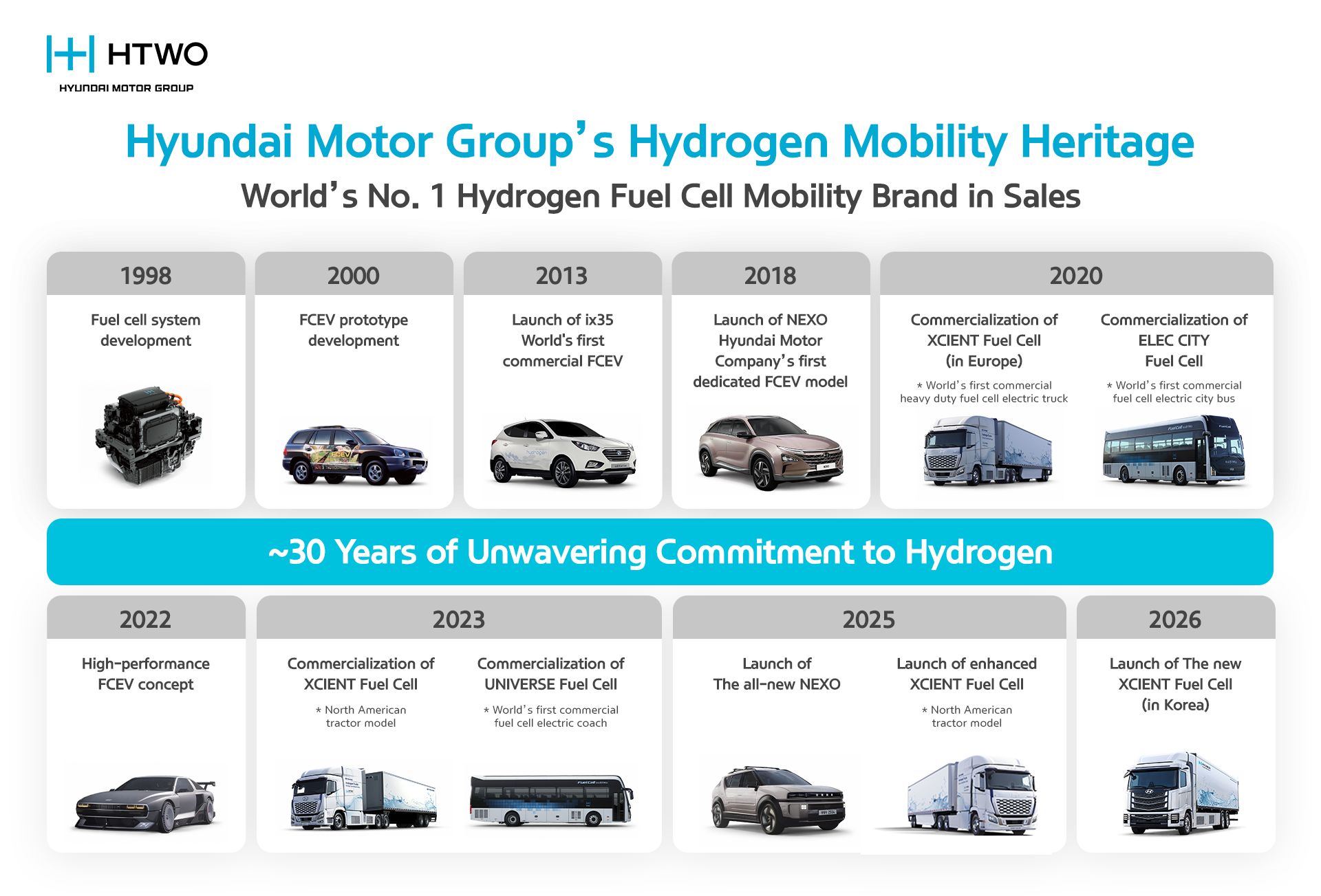
together. Hyundai Motor introduced the ix35 Fuel Cell in 2013 as the world's first mass-produced
passenger FCEV, followed by NEXO in 2018, a model developed exclusively as a FCEV. NEXO
surpassed 10,000 cumulative domestic sales in 2020 and 30,000 in 2023. In 2022, annual sales of
the model reached 10,164 units, exceeding 10,000 for the first time.
Hydrogen mobility has also expanded from passenger cars into commercial vehicles. Hyundai Motor
Group established a hydrogen mobility line-up spanning both passenger and commercial vehicles
with the launch of the ELEC CITY Fuel Cell in 2019, the XCIENT Fuel Cell in 2020, the world's
first mass-produced heavy-duty fuel cell electric truck, and the UNIVERSE Fuel Cell in 2023.
If demand is the starting point for market expansion, the core of scaling up lies in
establishing a self-reinforcing structure where production, demand, infrastructure, policy,
and financing move together. Rather than simply adding the number of projects, the industry
must cultivate integrated hydrogen ecosystems.
Given the long-term, capital-intensive nature of hydrogen ventures, robust financial and
investment conditions must be secured for projects to progress beyond FID to construction and
operation.
Thus, market scale cannot be realized through any single element alone. Production and demand
must grow in tandem, connected by shared infrastructure, and backed by policy frameworks that
ensure long-term bankability.
HTWO ENERGY Cheongju, operated by Hyundai Motor Group in Cheongju, Chungcheongbuk-do,
exemplifies a localized hydrogen ecosystem.
As a Waste-to-Hydrogen (W2H) initiative, HTWO ENERGY Cheongju converts biogas generated from
municipal sewage sludge into waste-derived hydrogen, supplying it directly to local mobilities.
The facility currently produces approximately 500 kg of hydrogen per day, with plans by Hyundai
Motor Group to expand average daily output to 2 tonnes by 2030.
By co-locating production and refueling assets and consuming the generated hydrogen within the
region, the project reduces long-distance trucking and storage costs while mitigating price
volatility—establishing a local production for local consumption (Ji-san-ji-so, 地産地消) hydrogen
ecosystem that strengthens regional energy independence.
The Saemangeum AI Valley project illustrates how this linkage can be scaled into a broader
energy architecture. It integrates gigawatt-scale solar power generation and a 200-MW scale
water electrolysis plant for green hydrogen production, directly connecting them with supply
infrastructure, mobility, AI data centers, and ultimately an AI Hydrogen City within a single
regional hub.
While HTWO ENERGY Cheongju represents a compact, community-scale model that closely links local
power generation and consumption, the Saemangeum AI Valley represents a comprehensive energy
system model that converges renewable energy, electrolysis, AI, urban infrastructure, and
mobility to elevate the scale of the energy system.
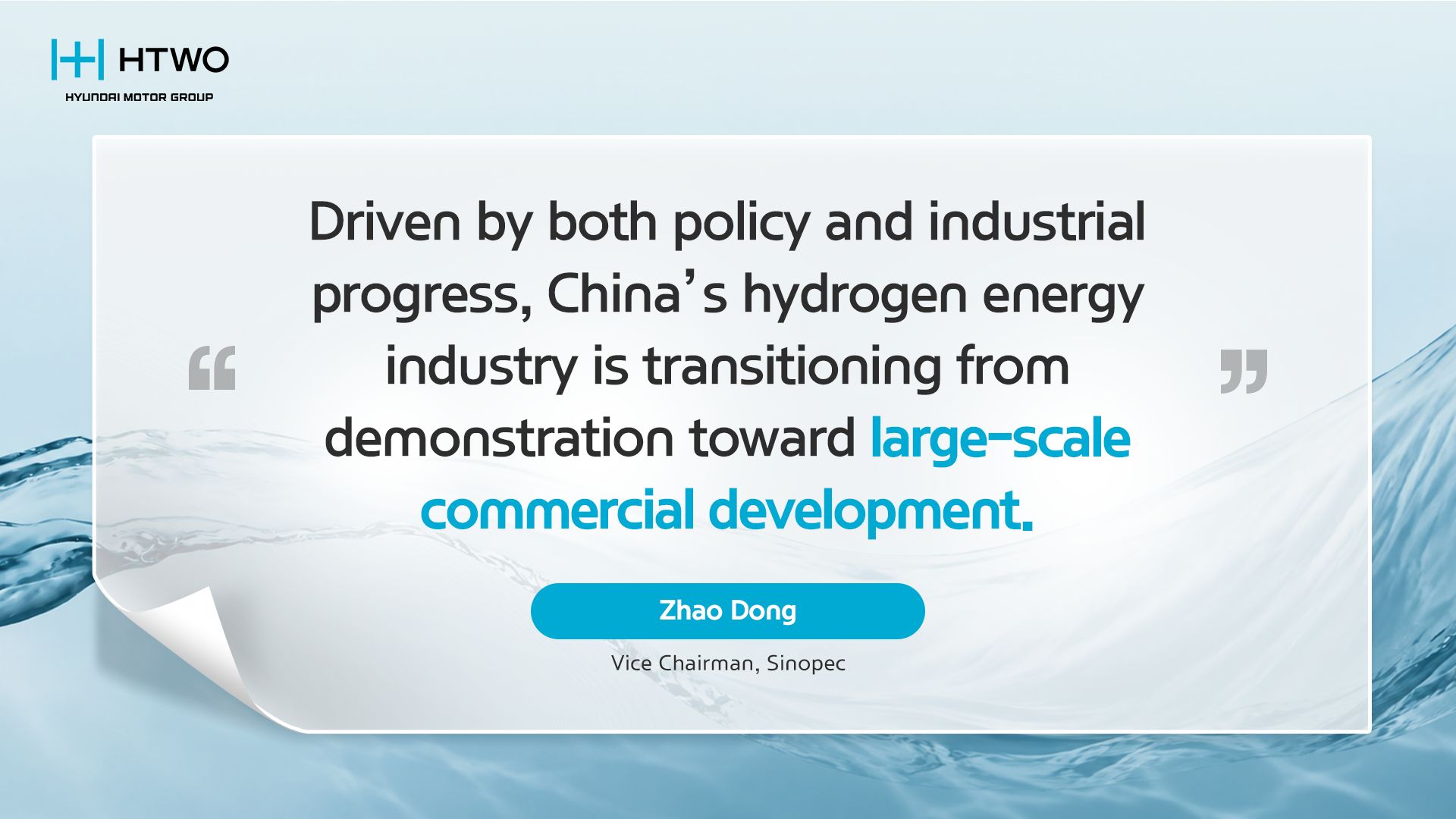
As these models demonstrate, hydrogen ecosystems can change shape depending on regional
industrial endowments and energy conditions. In Europe, policy-mandated demand serves as a key
factor. In China, industrial-scale equipment manufacturing, massive production, and
government-guided adoption lead the market. In the U.S. Gulf Coast, confirmed incentives and
legacy energy/export infrastructure drive the projects. In India, competitive renewable power
and national hydrogen/ammonia missions are powering the market expansion. Reflecting on these
regional differences, Vice Chair Jaehoon Chang explains: China's market expansion strategy was
to create scale and integrating it into its industry, while Korea started from mobility and
built the whole value chain around it.
Not every country needs to build the same hydrogen ecosystem. What matters is leveraging each
country's strengths in energy, industry and infrastructure to develop a sustainable business
model.
As international hydrogen trade expands, these connections will increasingly extend across
national borders. According to the IEA, more than 40% of the announced volumes of low-emissions
hydrogen projects for 2030 are intended for international trade. However, the share of
export-oriented projects that have reached the operational, under-construction or committed
investment stages remains limited. This is why it is important to develop the necessary
infrastructure and systems in tandem, including transportation and storage facilities, ports,
pipelines and certification frameworks.
Ultimately, the benchmark for assessing the scale-up of the global hydrogen market must shift
from how many projects have been announced to how many are connected and integrated. Production
capacity, demand, infrastructure, policy and finance need to advance together, enabling more
projects to become commercially viable. This, in turn, can generate economies of scale, lower
costs and create a virtuous cycle that stimulates further demand and investment.
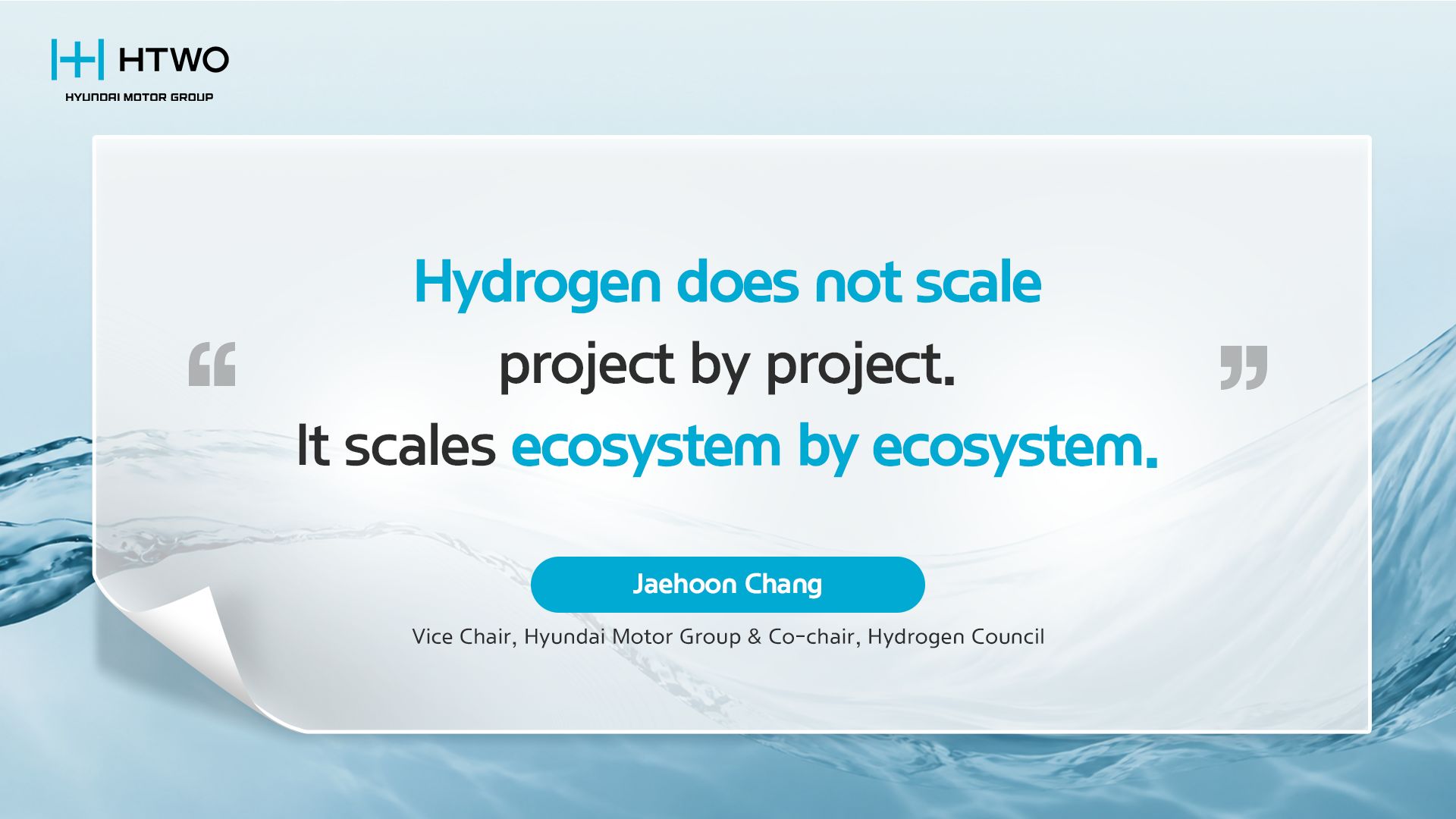
Vice Chair Jaehoon Chang emphasized that “scaling up the hydrogen industry requires building an
ecosystem, not simply developing individual projects.” His remarks underscore that the ability
to connect production and demand with infrastructure, policy and investment within an integrated
ecosystem will be a decisive factor in the future growth of the global hydrogen market.
If the past decade was a period of validating hydrogen's potential in the real market, the next
decade will determine how far that potential can be scaled into a major industry.
As hydrogen now stands at the threshold of commercialization at scale, market attention is
shifting beyond project plans and announcements toward how to translate them into actual
investment, construction, and operations, and ultimately build a thriving hydrogen ecosystem.
Q) What is the Global Hydrogen Compass 2026?
A) The Global Hydrogen Compass 2026 is a comprehensive
report on the global hydrogen industry, jointly published by the Hydrogen Council and McKinsey &
Company in September 2026. The report analyzes investment, production capacity, demand, and
policy developments across waste-derived hydrogen projects worldwide. Drawing on insights from
approximately 70 CEOs of Hydrogen Council, which includes leading global companies such as
Hyundai Motor Group, Air Liquide, Toyota, and Sinopec, the report outlines key challenges facing
the global hydrogen industry.
Q) What is the global investment scale for waste-derived hydrogen in 2026?
A) Global investment in waste-derived hydrogen has exceeded USD 130 billion, with more than 570
projects having reached the final investment decision (FID) stage or beyond. Confirmed
waste-derived hydrogen production capacity stands at 6.9 million tonnes per year.
Why are policy support and offtake agreements important for the hydrogen market?
A) Hydrogen production facilities require substantial upfront investment, making long-term
demand essential for companies to make investment decisions. Of the approximately 11 million
tonnes of waste-derived hydrogen demand that could become economically viable by 2030, around 6
million already have an established demand base through policies currently in place.
What will be the key priorities for the global hydrogen market over the next decade?
A) The focus will be on reaching actual FIDs, executing construction and operation, and securing
stable demand and offtake, rather than on the sheer number of projects. The key challenge will
be integrating production, demand, infrastructure, and policy into a cohesive ecosystem capable
of supporting a sustainable hydrogen market.