





Industrial Applications
Creating New Demand
Through Expanded
Hydrogen Use
Hydrogen is emerging as a key driver of the energy transition across industries.
By replacing conventional fossil fuels in industrial operations, hydrogen
helps
significantly reduce carbon emissions and supports the shift toward a more sustainable future.
Industrial Applications
Hydrogen in Action
Across Industries
With its high energy density, hydrogen can be stored in large quantities for extended periods and converted into electricity, heat, or other forms of energy whenever needed. From manufacturing and steelmaking to ports and power generation, hydrogen is replacing fossil fuels across diverse sectors and accelerating the energy transition.
Hydrogen-Based Heat Source for Industrial Decarbonization
Hydrogen Burner
Hydrogen burners are low-emission thermal energy systems that generate heat through the combustion of hydrogen and oxygen. By replacing conventional LNG burners in automotive manufacturing processes, hydrogen burners can reduce carbon dioxide emissions. In addition, the adoption of lean-burn technology minimizes nitrogen oxide (NOx) emissions.
Hyundai Motor has completed the development and performance validation of a 100,000 kcal/h-class hydrogen burner. Together with Hyundai Rotem, the company has also jointly developed a 1,000,000 kcal/h-class hydrogen burner.

Paint Drying Process
Using a Hydrogen Burner
-
Step 01
Hydrogen and Air Supply
Hydrogen and air is mixed at an optimal ratio suited for lean combustion conditions and injected into the combustion chamber through the burner nozzle.
-
Step 02
Flame Formation
Ignited hydrogen-air mixture creates flame and releases thermal energy without carbon emission.
-
Step 03
Air Heating
Circulated air, heated by the flame’s thermal energy is supplied to the paint oven through ducts.
-
Step 04
Paint Curing
Hot air cures the coating on the vehicle body surface evenly, ensuring paint quality.
-
Step 05
Air Recirculation
A portion of recovered hot air is reheated and recirculated into the system, improving energy efficiency.
01 05 Step 1 of 5
Hydrogen Burner Applications
in Automotive Manufacturing
Hydrogen burners have been initially deployed in automotive paint ovens, with plans to expand their application across a wider range of vehicle manufacturing processes that require high-temperature heat.
-
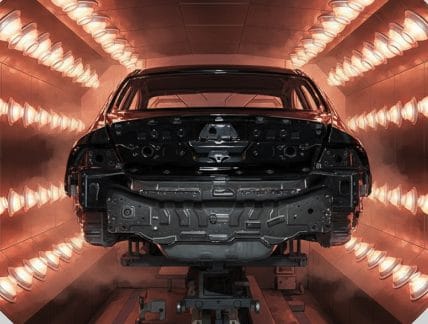
Paint oven
Hydrogen burners heat air to the target temperature to quickly and evenly dry and cure automotive coatings.
-
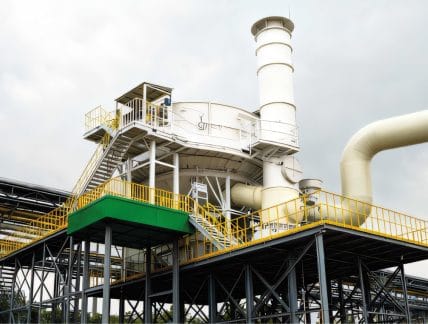
Regenerative Thermal Oxidizer (RTO)
Heat generated by the hydrogen burner raises the exhaust-gas temperature to 800–850°C in RTO systems, allowing volatile organic compounds (VOCs) to be fully combusted and improving energy efficiency.
-
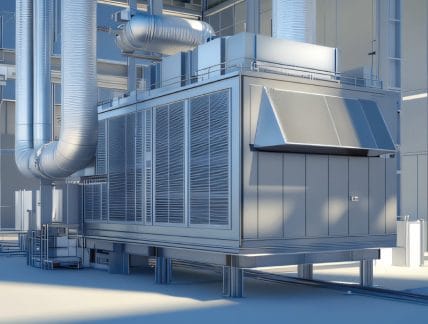
Air Handling Unit (AHU)
An air handling unit (AHU) controls indoor temperature and humidity. By incorporating a hydrogen burner, it can quickly heat outdoor air before supplying it to the facility.
-
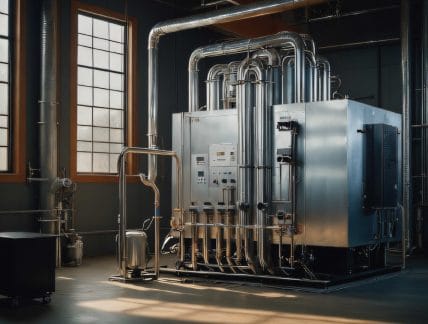
Boiler
High-temperature exhaust gas from the hydrogen burner heats water in the boiler tubes, generating steam or hot water that is distributed throughout the facility.
Low-Carbon Logistics with Reduced Reliance
on Fossil Fuels
Port Equipment
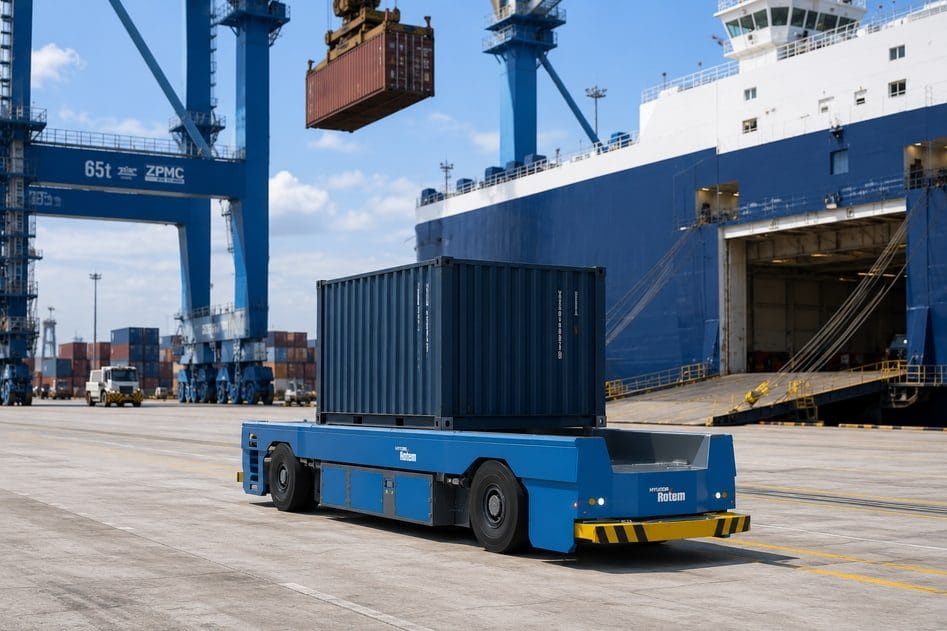
Hydrogen-powered solutions are being introduced in port areas where the long operating hours of
diesel-powered equipment contribute to severe air pollution.
Hydrogen
applications
spanning coastal operations, terminals, and hinterland transportation help reduce port emissions
while
maintaining continuity across cargo-handling and logistics operations.
Fuel Cell
Electric Port AGV
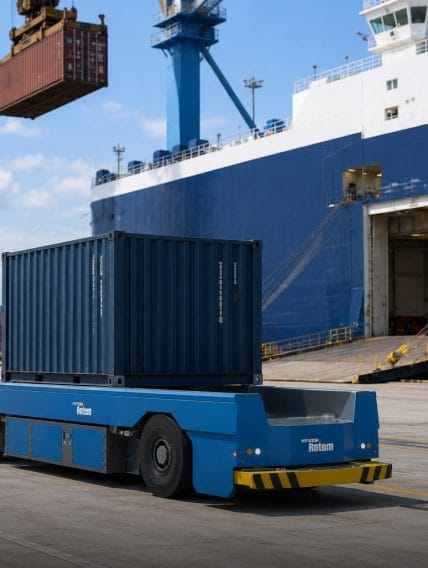
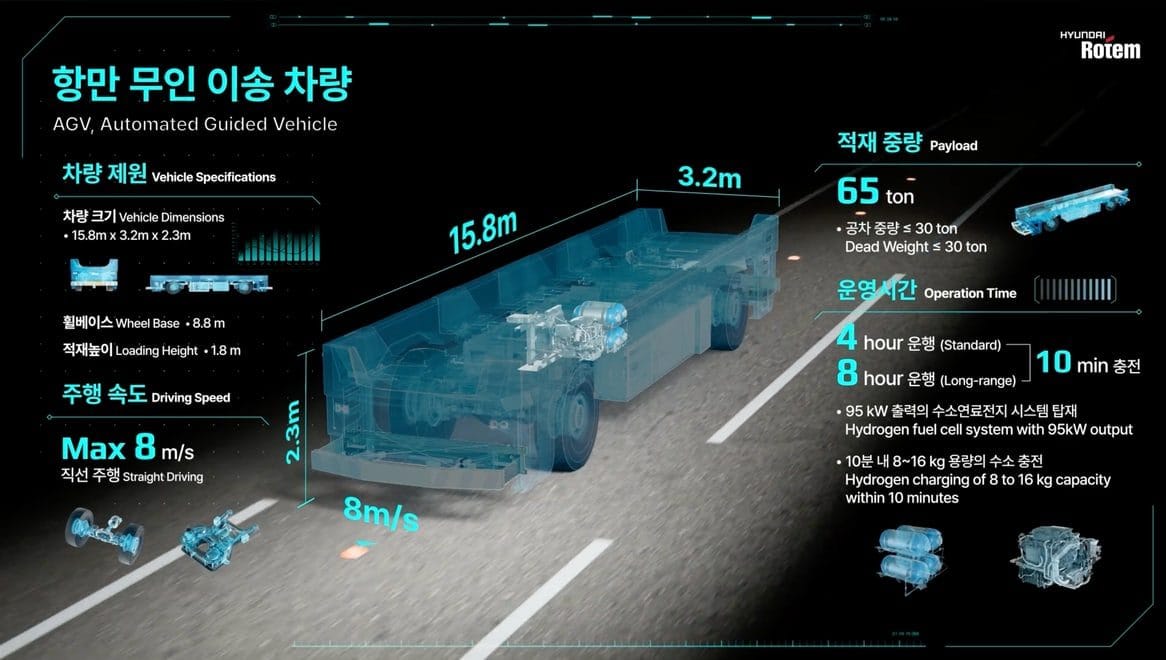
Hyundai Rotem and Hyundai Motor Company are working to secure a competitive edge in low-carbon logistics by replacing the power source of Automated Guided Vehicles (AGVs) operating at automated port terminals with hydrogen fuel cell systems.
To achieve this, the companies are conducting demonstration projects using AGVs equipped with a power pack that integrates hydrogen fuel cells and hydrogen storage tanks into conventional high-voltage battery systems.
Hydrogen fuel cell electric port AGVs reduce vehicle weight by approximately 1.6 tons compared with battery-powered models, improving energy efficiency while reducing stress on yard pavement.
In addition, a hybrid control algorithm is being developed to enable operation with the fuel cell as the primary power source and the battery as a supplementary power source.
Efficient, Low-Carbon Power Generation
Power Generation
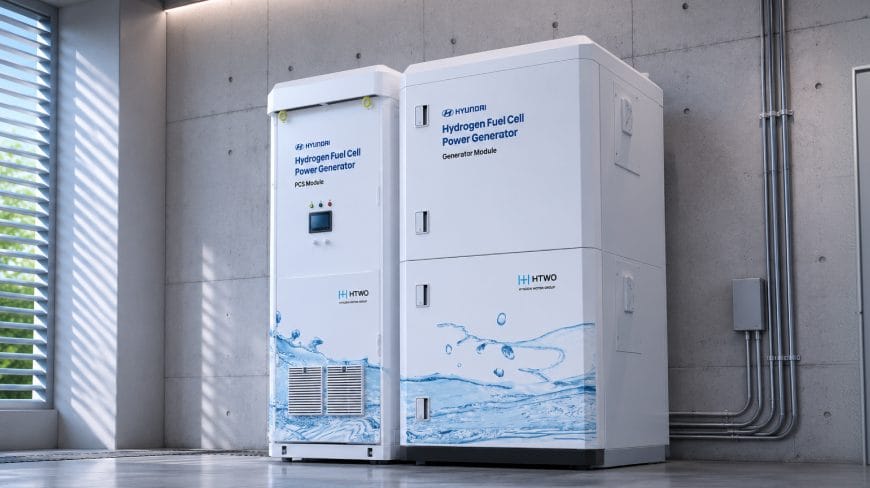
Hydrogen power generation, which produces and supplies electricity for buildings and large-scale industrial facilities, is gaining attention as a next-generation distributed energy source.
It not only provides a stable supply of electricity to areas with high power demand, but also offers an effective way to utilize surplus electricity generated in regions with a high share of renewable energy.
Fuel Cell Power Generator Specifications
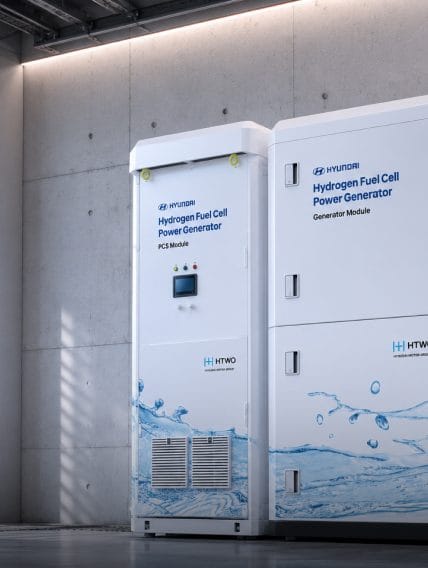
Fuel Cell Power Generator
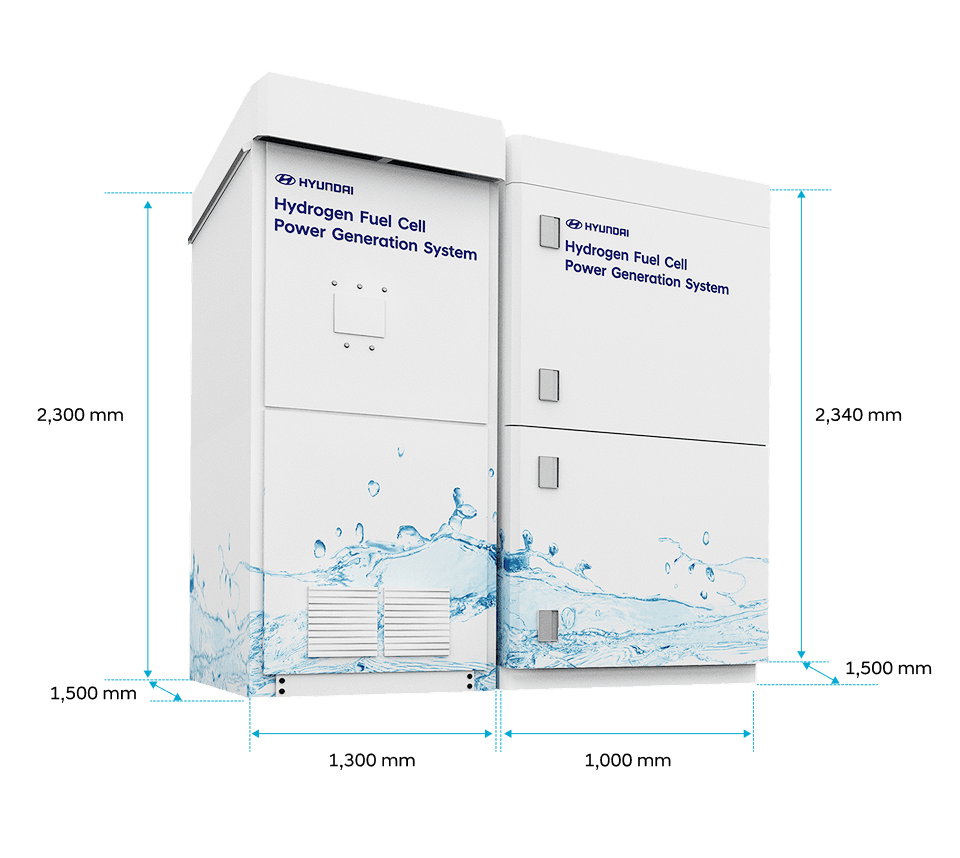
A modular system that allows power capacity to be flexibly scaled through series and parallel
integration.
Suitable for grid-connected applications, medium- to
large-scale
buildings, and distributed power generation systems.
- Max. power / Rated power
-
100kW/70kW
- Efficiency
-
50 %
or higher
- Monthly Power Supply
-
217 Households
at 92% Availability
Fuel Cell Power Generator Specifications
| General Specifications | Fuel Cell Type | PEMFC (Hydrogen Fuel) |
|---|---|---|
| Max. power | 100kW (Efficiency ≥ 50%) | |
| Rated power | 70kW | |
| Operating Mode | Grid-Connected | |
| Electrical Efficiency | ≥ 50% (LHV) | |
| Specifications | Size |
Power Generation Unit 1,300 x 1,500 x 2,300mm (1,400kg) Power Conversion Unit 1,000 x 1,500 x 2,340mm (1,400kg) |
| Electrical Specifications | AC 380 V (3-Phase, 4-Wire, 60 Hz) | |
| Communication Interface | Ethernet (TCP/IP) and Serial (RS-485) | |
| Installation Requirements | Fuel |
Fuel: Hydrogen (ISO 14687-2 / SAE J2719) Supply Pressure: 7 ~ 9 bar Fuel Supply Method: Pipeline connection |
| Others |
Installation: Indoor/Outdoor Installation, Forced Exhaust Type (PE) Cooling System: Antifreeze or Water Cooling (Separate Equipment Required) |
|
| Certification | Certification | KGS AH371 |
| Applications | Applications |
On-Site Power Generation for Buildings Small-Scale Distributed Power Generation |
※ The specified net power is the performance reference value measured in the initial state (BOL) of the fuel cell stack and system.
※ For power generation applications requiring long-duration continuous operation, the system is engineered to operate at an optimal point for efficiency and durability rather than at maximum output, enhancing fuel economy and system longevity.

Fuel Cell Power Generator Configuration
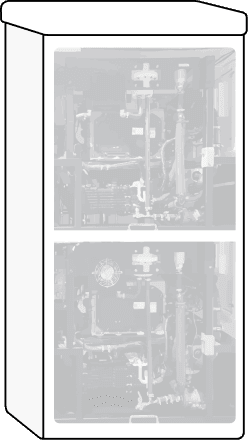
The 100kW fuel cell power generator developed by Hyundai Motor Company is based on the fuel cell system used in hydrogen fuel cell electric vehicles, featuring high energy efficiency, low noise, and eco-friendly operation with zero emissions. Leveraging the fast start-up and agile power control capabilities of the engine-type fuel cell system, Hyundai Motor Company’s fuel cell power generator offers a reliable solution that can respond quickly and flexibly to changes in power demand.








Fuel Cell Power
Generator Applications
-
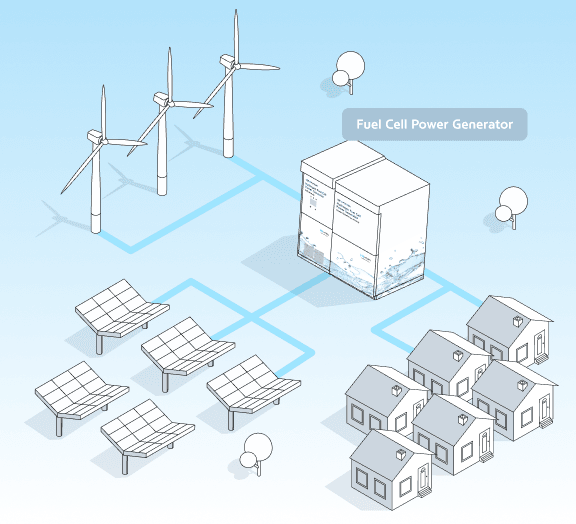
Distributed Power Generation
Fuel cell power generators are compact, enabling on-site power generation in urban areas and buildings.
Their fast response and flexible output control help balance the variability of renewable energy in Virtual Power Plant (VPP)* environments, making them a promising solution for distributed power generation.
Virtual Power Plant (VPP): A system that uses IT technologies to control and operate multiple small-scale, physically dispersed power generators as if they were a single large power plant.
-
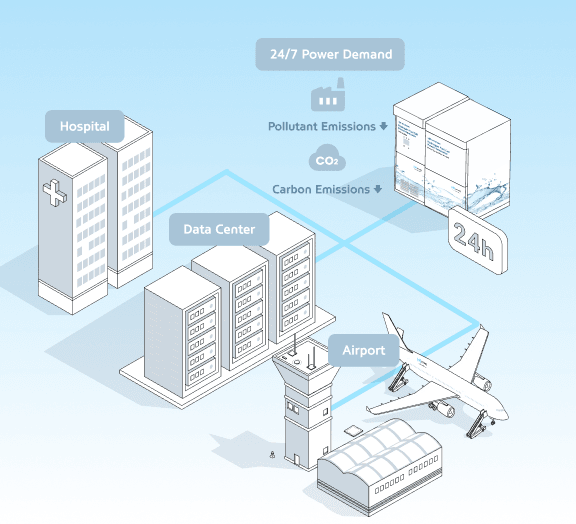
Emergency Power Supply
Fuel cell power generators can replace diesel generators during power outages, delivering rapid and reliable power in emergency situations.
With longer operating duration than battery-based systems and low-noise, low-emission operation, they are well suited for emergency power applications across a wide range of indoor and outdoor environments.
-
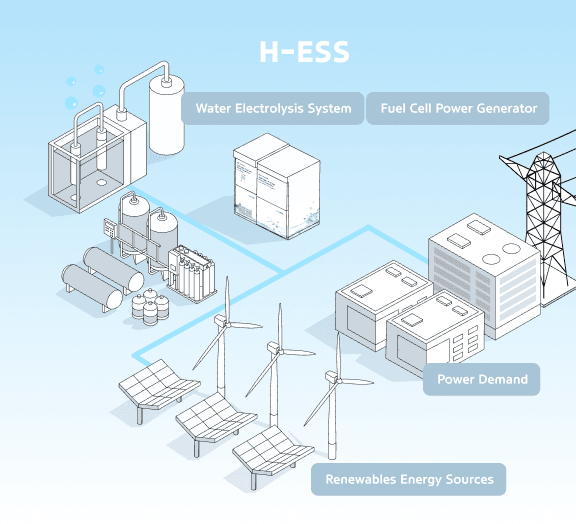
Hydrogen Energy Storage System (H-ESS)
Renewable energy sources like solar and wind power have variable output depending on weather, making energy storage essential. H-ESS converts electricity from power plants into hydrogen for storage and later converts it back to electricity using fuel cell power generators when needed.
H-ESS provides large-scale, long-duration energy storage compared to battery-based ESS, complementing renewables by reducing intermittency and improving efficiency to ensure energy stability.
Steel Production via Hydrogen-Based Direct
Reduced Iron (DRI) Technology
Low-Carbon Steelmaking

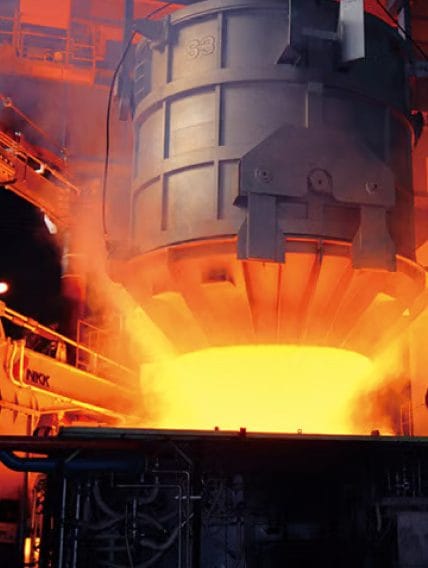
Hyundai Steel aims to produce steel products with approximately 90% lower carbon emissions than conventional blast furnace steel through the long-term development of hydrogen direct reduced iron (DRI) technology, which uses hydrogen instead of coal to reduce iron ore.
At the same time, the company is advancing the transition toward carbon-neutral steel production by introducing hydrogen into various processes across its steelworks, including thermal facilities and power generation systems.
Low-Carbon Steelmaking Process
-
Step 01
Renewable Energy
Electricity is generated from renewable sources such as solar and wind power.
-
Step 02
Water Electrolysis
Renewable electricity is used to split water into hydrogen and oxygen, producing green hydrogen with zero carbon emissions.
-
Step 03
Reduction Furnace
Iron ore is reduced using hydrogen and other reducing gases to remove oxygen and produce Direct Reduced Iron (DRI).
-
Step 04
Electric Arc Furnace
Scrap steel and direct reduced iron are melted in an electric arc furnace, where impurities are removed to produce molten steel.
-
Step 05
Low-Carbon Steelmaking
Molten steel produced using green electricity derived from renewable energy is ultimately processed into steel sheets.
01 05 Step 1 of 5
Business
Industrial Energy Transition
-
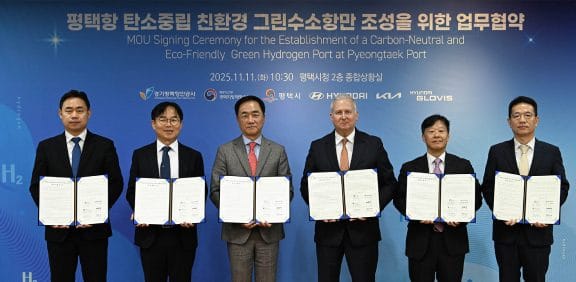
Fuel Cell Power Generator Deployment at Pyeongtaek Port

Deployment and operation of 100kW hydrogen fuel cell power generators at vehicle export and import terminals in Pyeongtaek Port
Participating Affiliates
-

Fuel Cell Power Generators for Building Self-Generation
Supply of fuel cell power generators for on-site power generation at Hyundai Motor Cultural Center in Ulsan
Participating Affiliates
-
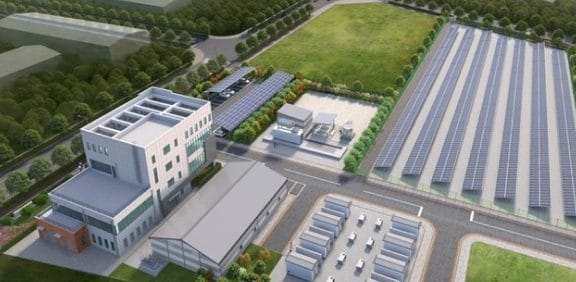
Fuel Cell Power Generators for ESS Power Compensation
Supply of fuel cell power generators for power compensation at the Wanju ESS Safety Evaluation Center
Participating Affiliates
-
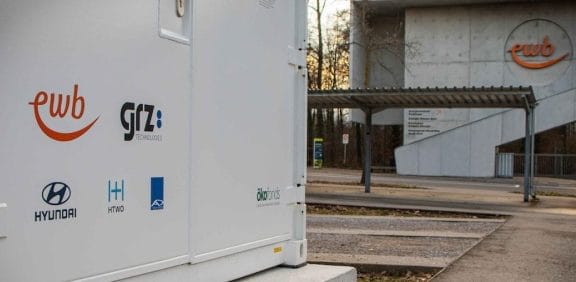
Fuel Cell Power Generators for Vehicle Charging and Building Backup Power
Supply of fuel cell power generators for vehicle charging and building backup power to GRZ Technologies in Switzerland
Participating Affiliates
-
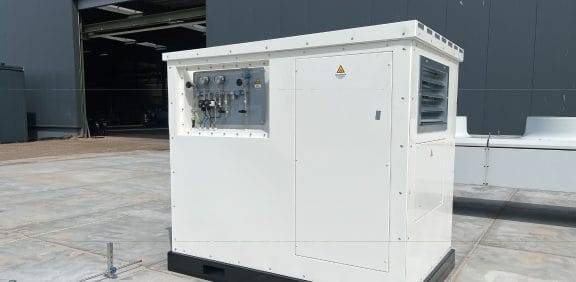
Combined Heat and Power Fuel Cell Generator Demonstration
Demonstration of a fuel cell generator for combined heat and power applications in collaboration with HyER Power
Participating Affiliates
-
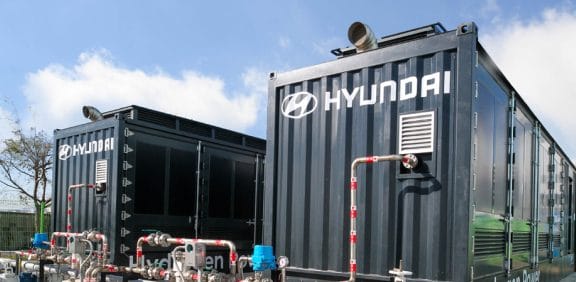
500kW Fuel Cell Power Generator Demonstration
Demonstration of a 500kW fuel cell power generator at Korea East-West Power’s Ulsan plant
Participating Affiliates
-

Hydrogen Burner Development and Demonstration
Development and demonstration of hydrogen burners for industrial applications, starting with Hyundai Motor Company’s Ulsan plant
Participating Affiliates
-
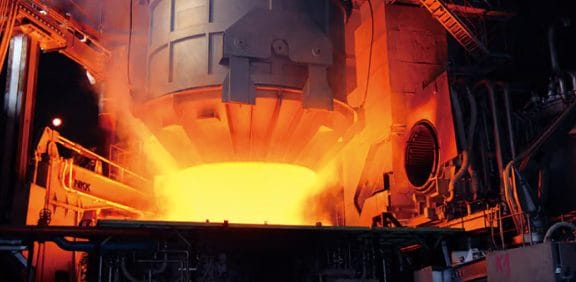
Low-Carbon Steelmaking
Advancing low-carbon steel production through hydrogen-based steelmaking technology
Participating Affiliates
-
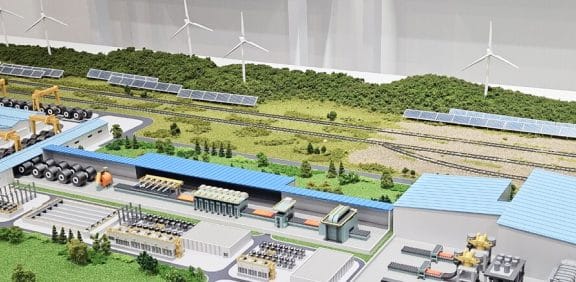
U.S. Electric Arc Furnace (EAF) Steel Mill
Development of an integrated electric arc furnace steel mill in Louisiana with the future introduction of hydrogen-based direct reduction technology
Participating Affiliates


FAQ
Questions About
Industrial Applications
-
A burner is a device that generates heat by burning fuel. When a conventional LNG burner combusts fuel, it emits carbon dioxide (CO₂) and water vapor (H₂O). By contrast, a hydrogen burner emits only water vapor, making it a more environmentally friendly heating system.
Hydrogen burners can be used in a variety of facilities at automotive manufacturing plants, including paint ovens, boilers, regenerative thermal oxidizers, and air-handling units. Hyundai Motor Company began applying hydrogen burners to the paint ovens at its Ulsan plant and plans to gradually replace LNG burners at its domestic production facilities.
-
The theoretical flame temperature of hydrogen is approximately 2,100°C, which is higher than that of LNG at approximately 1,950°C. However, by adjusting the air supply, hydrogen burners can be controlled to operate at temperatures comparable to those of LNG burners. Their thermal efficiency can also be made equivalent to that of LNG burners through optimized burner design.
However, hydrogen has a higher flame propagation speed and a wider flammability range than LNG. Therefore, the use of specially designed burners and dedicated control technologies is required.
-
Hydrogen fuel cell electric port AGVs can reduce vehicle weight by approximately 1.6 metric tons compared with battery-powered models. This improves energy efficiency and reduces the load imposed on yard pavements. They can also significantly improve overall equipment utilization through shorter refueling times.
As ports transition to carbon-neutral operations, hydrogen fuel cell electric AGVs can help minimize the need for large-scale expansion of electrical infrastructure. Hydrogen is expected to be supplied efficiently through mobile hydrogen refueling facilities within the port, operated in conjunction with tube trailers.
-
A fuel cell power generator consists of a power generation module and a PCS (Power Conditioning System) module, which operate as a set. Specifically, one power generation module consists of two engine-type fuel cells and operates together with one corresponding PCS module. The PCS module is a power conversion device that converts the direct-current (DC) electricity generated by the fuel cells into alternating-current (AC) electricity.
To increase the power generation capacity, an additional power generation module must be installed together with an additional PCS module. It is not possible to operate two power generation modules with only one PCS module.
-
The fuel cell power generator operates using a direct hydrogen supply system. Hydrogen can be supplied directly through a connection to a hydrogen pipeline. If no hydrogen pipeline is available, a pipeline can be configured and connected using hydrogen cylinders.
However, when hydrogen cylinders are used, the generator’s operating time is more limited than when it is connected to a hydrogen pipeline. At an output of 100kW, the generator consumes approximately 6kg of hydrogen per hour.
-
In the conventional blast furnace process, coal, in the form of coke, is used as a reducing agent during iron production, resulting in significant carbon dioxide emissions. By contrast, low-carbon steel making, which uses hydrogen instead of coal (coke), produces clean water rather than carbon dioxide during the iron production process.
In the medium to long term, Hyundai Steel aims to develop low-carbon steel making technology powered by renewable energy and green hydrogen and seeks to reduce carbon emissions by more than 90% compared with the conventional blast furnace process and ultimately establish a carbon-neutral steel production system.

Contact