

2026.06.26 HTWO
Whenever geopolitical tensions flare, global attention turns to the Strait of Hormuz. Although only about 33km wide, the strait serves as a passage for roughly 25% of global crude oil trade, making it a critical chokepoint in the global energy supply chain. Each time geopolitical tensions rise in the region, international energy markets face higher uncertainty, with increased volatility in crude oil prices and supply risks. Recent escalations in military tensions across the Middle East have once again raised concerns about vulnerabilities in the global energy supply chain.
For a long time, energy security was understood primarily as a matter of securing overseas resources and diversifying supply pathways to maintain stable supply. However, energy structures with high dependence on imports and specific supply routes are inevitably susceptible to geopolitical shifts, exposing the structural vulnerabilities inherent in national energy systems.
Rising energy costs and supply instability can undermine a country’s industrial competitiveness and its broader economic stability. Countries with heavily concentrated energy mixes or energy-intensive industries are particularly susceptible to these impacts.
As electrification and the expansion of renewable energy accelerate in pursuit of decarbonization, energy systems face a set of structural pressures: growing electricity demand, increasing supply variability, and the rising burden of managing grid stability.
To meet South Korea's 2035 Nationally Determined Contribution (NDC) targets for the transportation sector, the number of electric vehicles in operation would need to expand to approximately 9 million units – requiring an additional 29 TWh of electricity annually. This is equivalent to the output of roughly four nuclear power plants, and expanding power generation infrastructure at this scale within nine years presents a significant challenge. An electrification-centered transition alone faces structural limitations in meeting both rising electricity demand and system stability requirements.
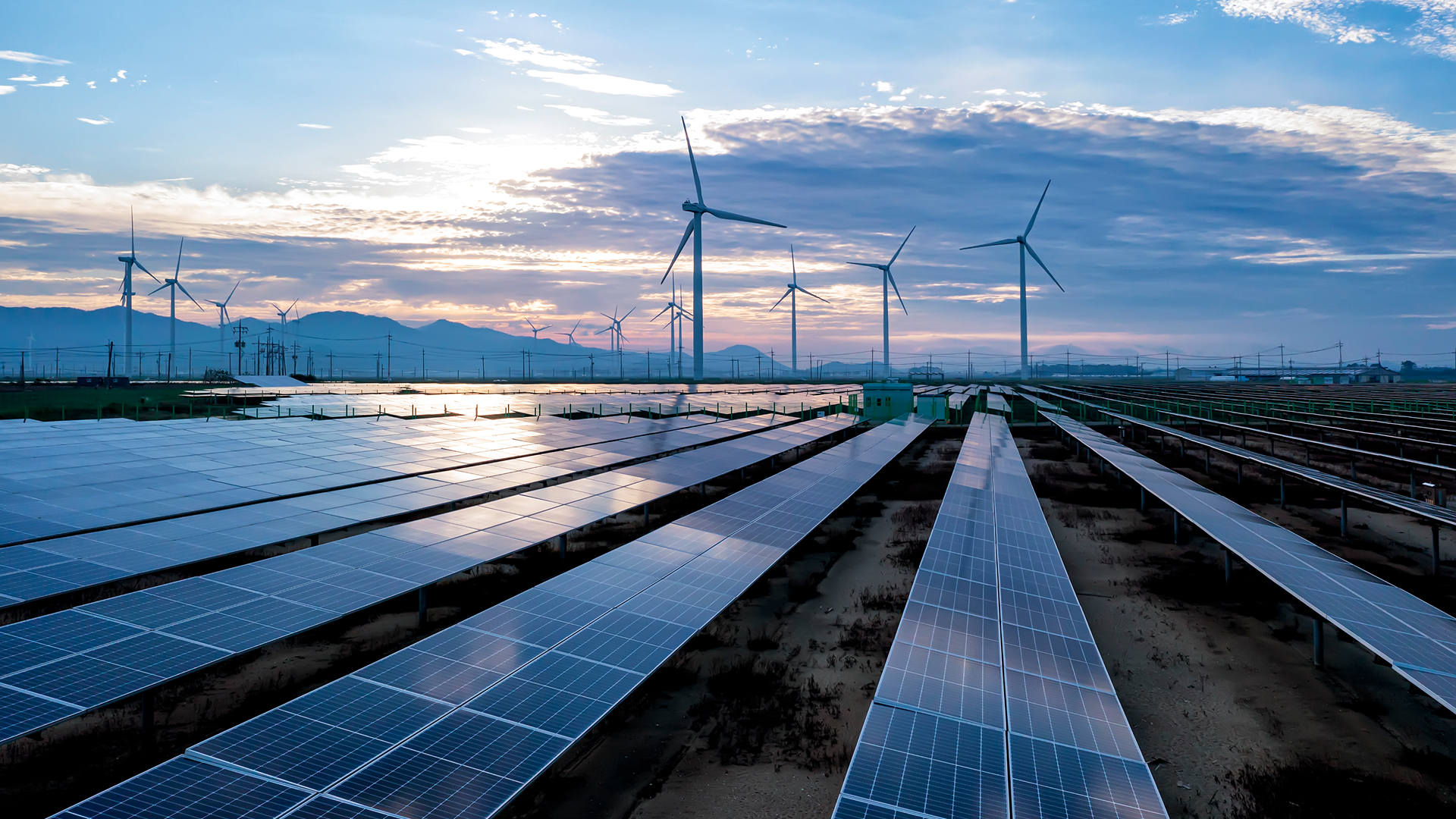
Solar and wind power are essential tools for achieving carbon neutrality and important alternatives for reducing fossil fuel dependence while expanding domestically produced energy. However, renewable energy sources are intermittent in nature, driven by fluctuating weather conditions and time of day. When combined with surging demand from sources such as EV charging, particularly the high instantaneous power draw of commercial vehicles, mismatches between supply and demand are likely to widen even further.
As variability on the supply side and sharp demand peaks on the demand side expand simultaneously, the power grid faces increasing pressure to maintain real-time balance. When power generation falls short, supply stability can be compromised. When generation surges, output curtailment or grid reinforcement may be needed to prevent overvoltage and frequency instability. As the expansion of renewable energy and transition to electrification advance in parallel, ensuring grid stability and system flexibility across the broader power system is emerging as a central challenge.
In Europe, a series of grid-related incidents have followed the rapid expansion of renewable energy.
In Spain, a large-scale blackout occurred in 2025 when overvoltage and grid instability struck while renewable energy accounted for more than 70% of power generation.
This is not merely a question of power generation capacity, but rather a demonstration that without sufficient flexibility to store generated electricity and absorb variability, the risks can spread across the entire energy system.
A further challenge arises on the supply chain side. The solar power industry remains heavily dependent on certain countries for key equipment and raw materials, creating new forms of geopolitical and industrial risk throughout the energy transition.
As the transition toward carbon neutrality accelerates, energy systems face another challenge. Whereas energy security was once centered on resource procurement, it is now evolving into a question of building resilient energy systems capable of absorbing both external shocks and system-level variability.
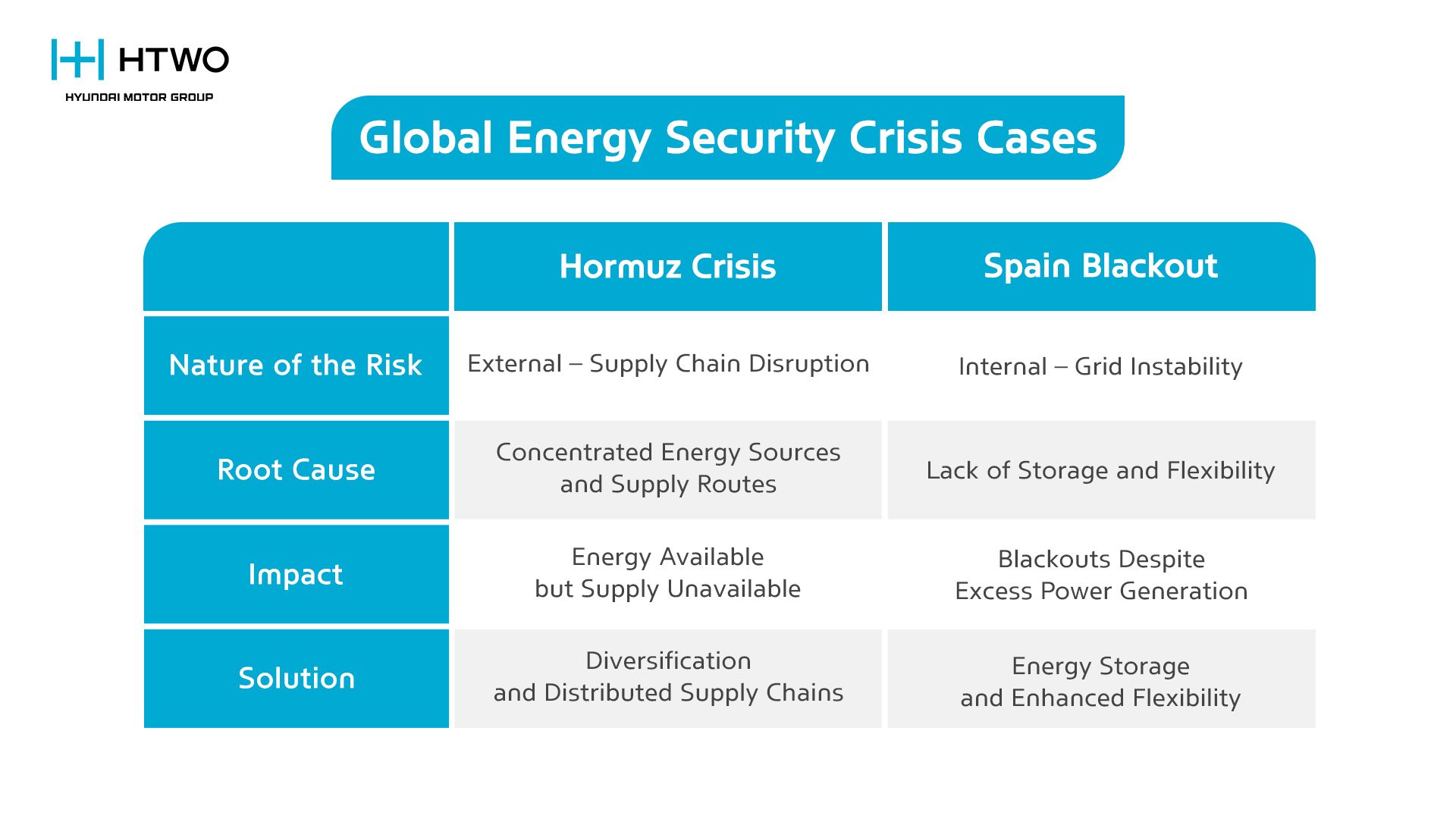
Amid these shifts, hydrogen is emerging as a strategic energy asset for building a resilient energy system.
Building a resilient energy system requires not only the diversification of supply pathways, but also the flexibility to store energy and utilize it in various forms when needed. Hydrogen is clean, has high energy density, and can be stored, transported, and utilized in various forms, making it a key asset for securing both system stability and flexibility.
1. Supply Pathway Diversification: Mitigating Geopolitical Risk
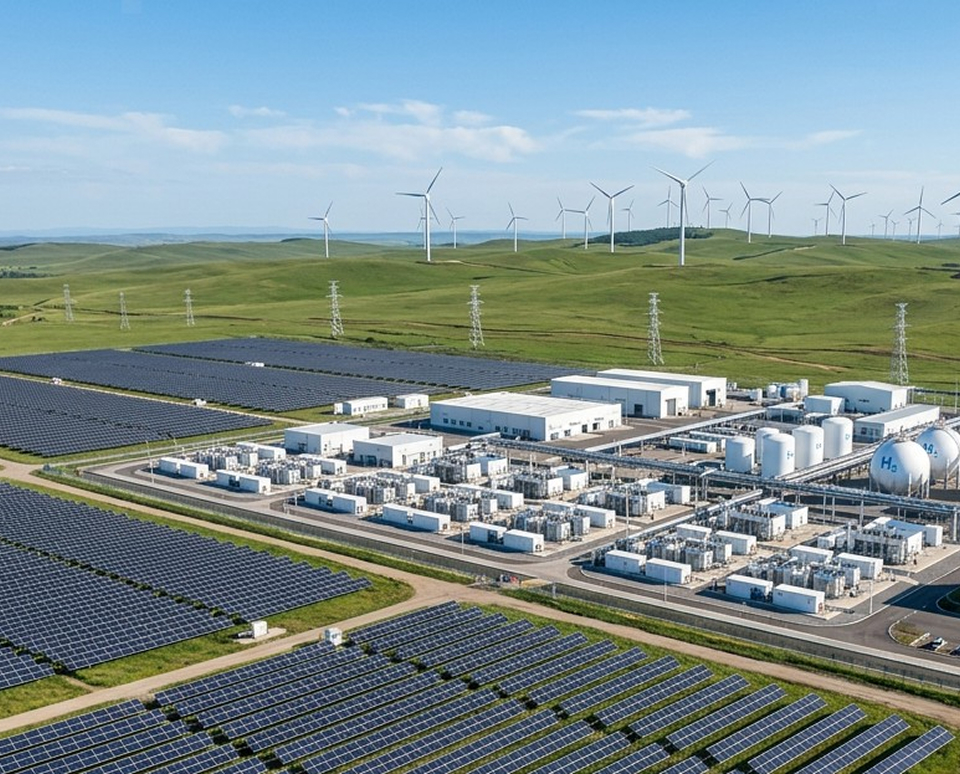
Unlike fossil fuels that are concentrated in specific regions such as the Middle Eastern oil fields, hydrogen can be produced virtually anywhere water and electricity are available. Given the right technology, it can be generated from a wide range of sources including solar, wind, nuclear, and biogas – reducing dependence on specific countries or resources and contributing to a more diversified energy supply base.
2. Large-Scale Storage: Overcoming the Intermittency of Renewable Energy
Hydrogen enables large-scale storage by converting surplus electricity generated from renewables into hydrogen through electrolysis. Hydrogen can be stored over long periods without loss and drawn upon when needed, bridging the gap between when energy is produced and when it is consumed. Its capacity for long-term storage is particularly valuable in mitigating the intermittency and grid instability that arise from the output variability inherent in renewable energy sources.
3. Flexibility: From Power Generation to Industry
Beyond power generation, hydrogen can be utilized across a wide range of sectors including industry and transportation. The ability of a single energy carrier to connect multiple end-use sectors provides a foundation for more flexible responses to fluctuations in supply and demand within a shifting energy environment. The process of converting surplus electricity into hydrogen for storage, transportation, and utilization also serves as a key enabler for sectors such as industry, transportation, and heating, where electrification alone is not sufficient for decarbonization.
Energy security is no longer simply about how many resources a country has secured. It is now directly tied to the capacity to operate stable systems in the face of external shocks and internal fluctuations.
In this context, hydrogen is gaining recognition as an energy carrier equipped to meet the new conditions that energy security demands — through supply diversification, storage capability, and flexible utilization. It is increasingly regarded as a strategic energy asset capable of playing a central role in building resilient energy systems that can absorb external shocks and internal variability at once.
So what characteristics does hydrogen bring to such a system, and in what ways can it actually be used?
The next episode will explore what it means for hydrogen to function as an "energy carrier" that stores and transports energy.