
HTWO
Brand Story

For Hyundai, the hydrogen society is a multi-generational commitment.

From the very beginning of our journey, when our honorary chairman encouraged researchers to push the boundaries of developing hydrogen fuel cell vehicles, to our Evecutive Chair extending our commitment to the hydrogen society for generations to come. 

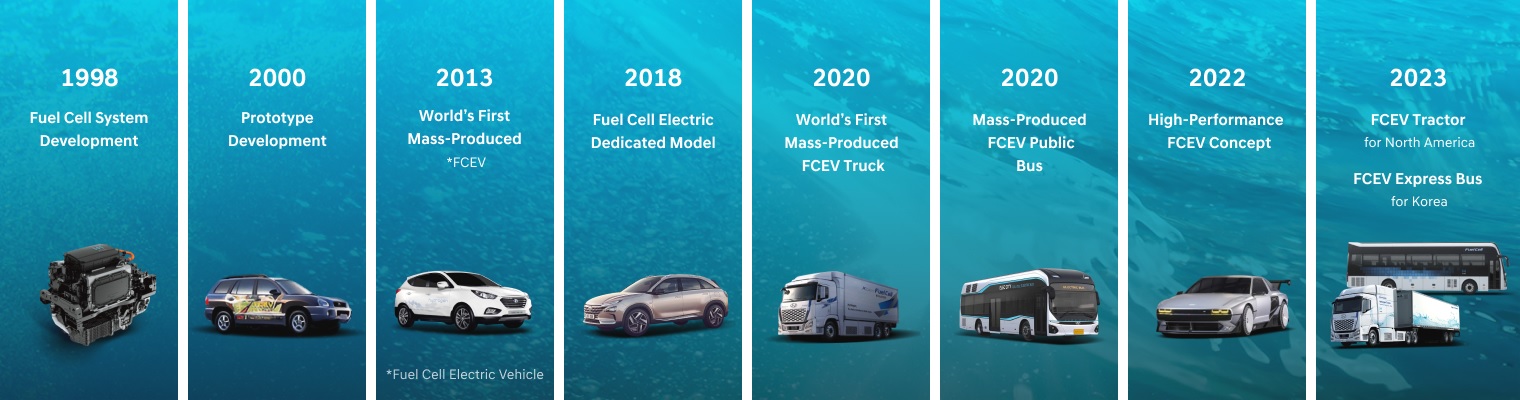
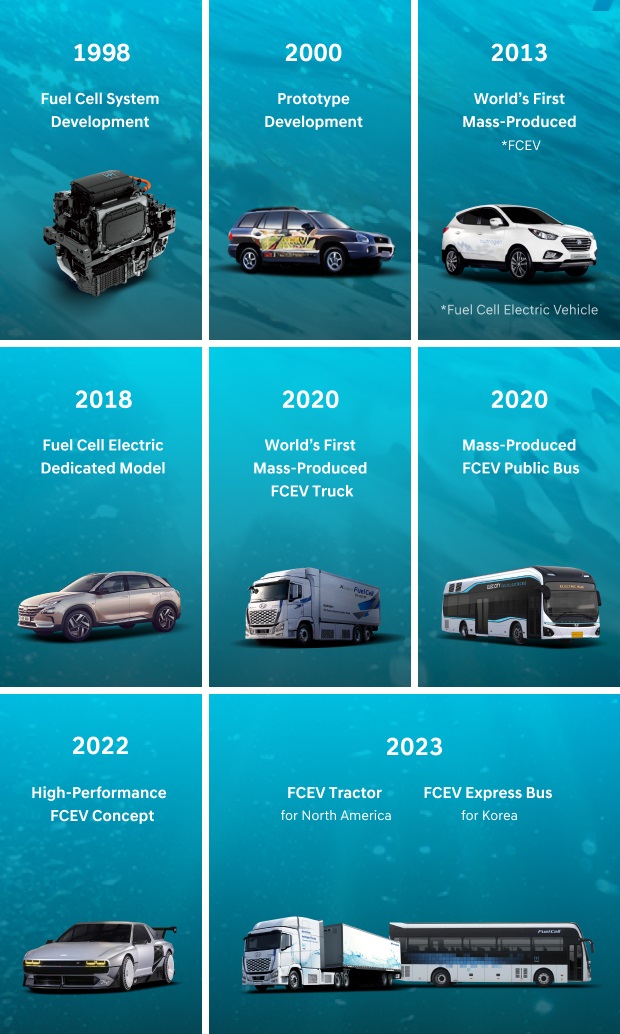
Hyundai Motor Company has pursued continuous investment and innovation in hydrogen technologies for nearly three decades, since establishing a dedicated organization for hydrogen research and development in 1998. Hyundai successfully developed its own proprietary fuel cell stack by 2004, and in 2013, unveiled the world’s first mass-produced hydrogen fuel cell electric vehicle: the Tucson ix35 Fuel Cell.

In 2018, Hyundai launched the NEXO, a dedicated fuel cell passenger vehicle, opening the door to the future of hydrogen mobility. This was followed by a series of industry firsts, including the XCIENT Fuel Cell, the world’s first mass-produced hydrogen-powered heavy-duty truck; the ELEC CITY Fuel Cell city bus; the UNIVERSE Fuel Cell coach bus.

NEXO recorded cumulative sales of over 40,000 units across more than 25 countries worldwide, making it by far the no. 1 best-selling hydrogen fuel cell passenger vehicle in the world.
In April 2025, Hyundai introduced the all-new NEXO, which achieved approximately 7,000 contracts within just three months of launch, further solidifying its position as the most widely deployed hydrogen-powered passenger vehicle globally.

30 years of hydrogen fuel cell research and development 30 years of hydrogen fuel cell research and development

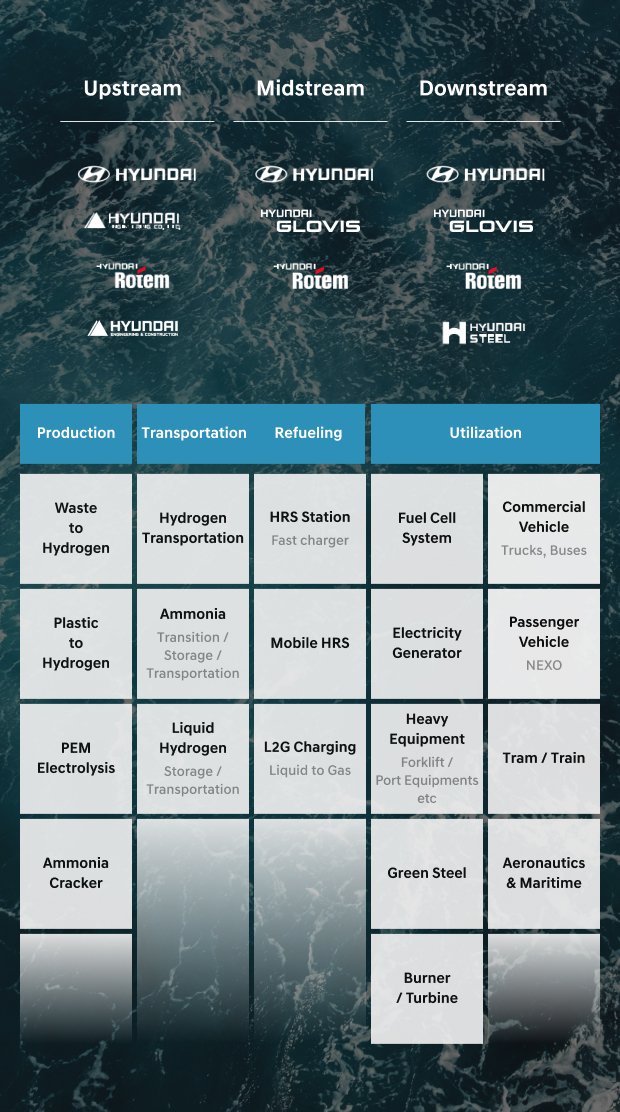
In 2024, beyond our achievements in the hydrogen mobility sector, Hyundai Motor Group introduced HTWO, a hydrogen brand and business platform that integrates capabilities of our affiliates within the Group to deliver end-to-end solutions across the whole hydrogen value chain—from production to storage, transportation, and refueling, to utilization.

HTWO serves as an open platform for collaboration, partnership, and investment, continuously evolving and growing to drive the acceleration of a sustainable hydrogen society. It combines our pioneering expertise in mobility, energy, and infrastructure with the shared vision and capabilities of our collaborators.

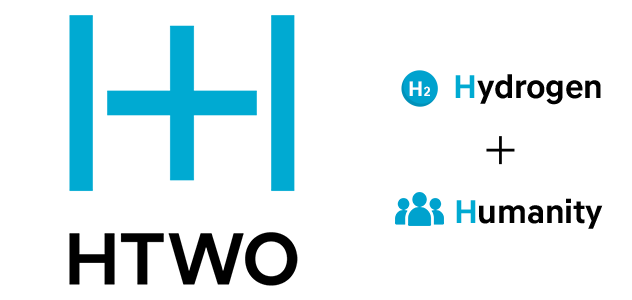
HTWO is Hydrogen + Humanity

The HTWO logo embodies the message of ‘Hydrogen for Humanity’ with two interlocking Hs, symbolizing the two main pillars of Hyundai Motor Group’s hydrogen value chain business. HTWO reflects Hyundai’s commitment to hydrogen as a key solution for a cleaner future for society and future generations.
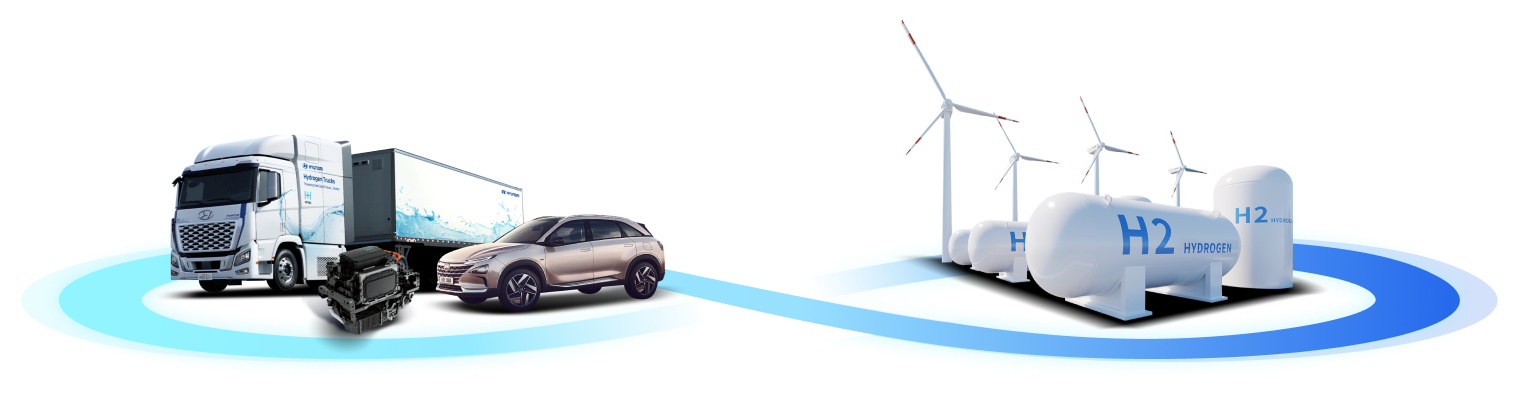
Hyundai is like no other energy company with roots deeply grounded in mobility, and like no other mobility company with branches so far reaching into energy sectors.

Through HTWO, Hyundai’s bold identity as an energy player builds upon its core as a mobility company. Beyond our mobility expertise, our unmatched cross-industry capabilities position us as a global leader in energy transition. Leveraging cross-industry capabilities, Hyundai Motor Group is reshaping the energy ecosystem by expanding both hydrogen demand and supply.
Together, HTWO unlocks immense potential and accelerates the hydrogen economy, delivering meaningful benefits for our communities, industries, and the planet.

The hydrogen society we envision is no longer a distant future—it is becoming a reality today.
Hyundai Motor Group remains committed to driving positive change for humanity and building a sustainable world for generations to come.
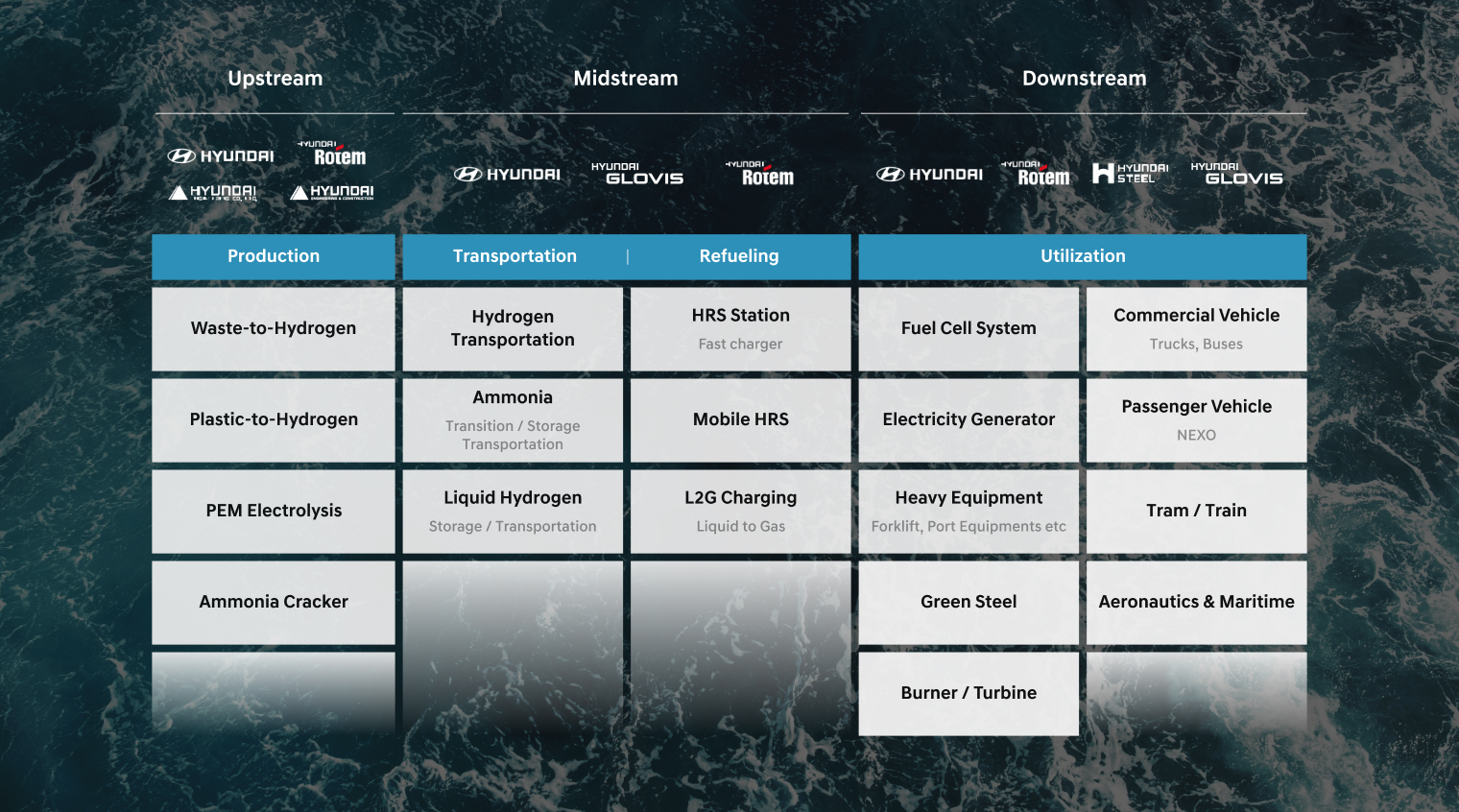
Hyundai Motor Gorup is leading the growth of its hydrogen business through its unique hydrogen business value chain solutions. The group seamlessly connects the entire value chain from production to utilization, including resource-circulating hydrogen production, distribution, ammonia carriers, hydrogen trams, green steel production, hydrogen trucks, and mobile hydrogen fuel cell generators. Hyundai Motor Gorup is leading the growth of its hydrogen business through its unique hydrogen business value chain solutions. The group seamlessly connects the entire value chain from production to utilization, including resource-circulating hydrogen production, distribution, ammonia carriers, hydrogen trams, green steel production, hydrogen trucks, and mobile hydrogen fuel cell generators.